
What Are Wall Anchors?
Bowing or inward-deflecting foundation walls are one of the most serious signs of structural distress in an Alabama home. Wall anchors provide a proven, minimally invasive solution by connecting an interior wall plate to an exterior buried anchor plate through a threaded steel rod, countering the soil and hydrostatic pressure pushing the wall inward. APS Foundation has been stabilizing bowing walls since 1977, and serves Birmingham, Huntsville, Mobile, and Columbus GA. Walls deflecting 2 inches or less are strong candidates for stabilization; beyond 2 inches, a thorough assessment is required to determine the right course of action.
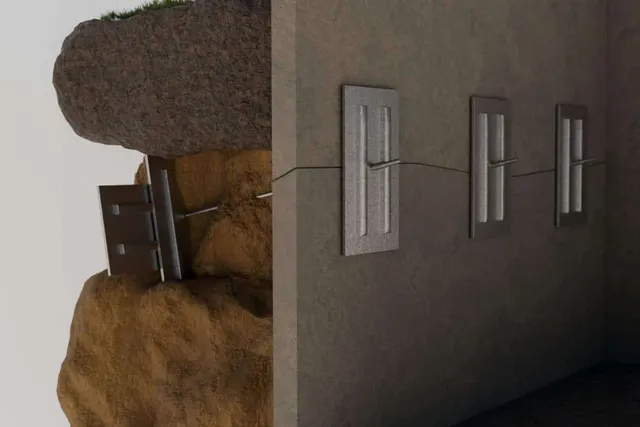
How Wall Anchors Work
Wall anchor systems work on a simple mechanical principle: soil pressure pushing a wall inward is counteracted by tension anchors extending from the wall outward into stable soil in the yard. Each anchor consists of three components: an interior steel plate mounted against the face of the bowing wall, a threaded steel rod passing through the wall and into the soil, and a buried exterior anchor plate seated in undisturbed soil at a prescribed distance from the foundation. Once installed, the system is tightened to remove slack and place the wall under immediate tension. Because the exterior plates are set in native soil beyond the pressure zone of the failing wall, the anchor develops resistance against the same forces that are causing the wall to bow. The threaded rod design allows the system to be periodically retightened over time, which gradually reduces the inward deflection of the wall and can move it back toward plumb. The two-inch rule is critical: walls that have deflected more than 2 inches may have experienced cracking or fracture of the wall material itself, which changes the structural picture considerably. APS inspectors carefully measure deflection before recommending wall anchors and will advise if a different approach is warranted for severely displaced walls. Wall anchor installation requires access to the yard on the exterior side of the wall to set the buried plates. If yard access is limited or impossible, helical tiebacks are an alternative that can achieve similar results from the interior side only.
“Soil pressure does not stop at 2 inches. It keeps pushing. Wall anchors counter that pressure permanently, and because the rod is threaded, we can come back and tighten as needed until the wall comes back to plumb.”
How APS Installs Wall Anchors
- 1
Free On-Site Assessment
An APS inspector measures the wall's deflection, evaluates cracking patterns, and reviews yard access to confirm wall anchors are appropriate. Deflection greater than 2 inches triggers a more detailed assessment.
- 2
Interior Preparation
Small openings are made in the wall at each anchor location to pass the threaded rod through. Any obstructions such as insulation or finishing materials are temporarily moved.
- 3
Exterior Plate Installation
Narrow trenches are dug in the yard at the required distance from the wall. The galvanized exterior anchor plates are set at the proper depth and angle in undisturbed native soil.
- 4
Rod Threading and Interior Plate Mounting
The threaded steel rod is connected from the exterior anchor plate through the wall to the interior steel plate, which is mounted flush against the wall surface.
- 5
Initial Tensioning
Nuts are tightened on the interior plate to remove slack and apply initial tension to the anchor system. The wall is now stabilized against further inward movement.
- 6
Trench Backfill and Documentation
Exterior trenches are backfilled and compacted, the yard is restored, and you receive a warranty package that includes your periodic retightening schedule.
What Wall Anchors Cost and What Is Covered
Cost Range
$600 to $1,500 per anchor; most walls require 3 to 6 anchors.
Warranty
Manufacturer warranty plus APS in-house warranty, transferable to new owners at no additional cost.
Frequently Asked Questions
How often do wall anchors need to be retightened?
APS typically recommends an annual retightening visit during the first few years after installation. As the wall gradually moves back toward plumb and the system stabilizes, the interval between adjustments lengthens. Your inspector will advise on the specific schedule for your installation.
Will wall anchors straighten my bowing wall?
Yes, over time and with periodic retightening, wall anchors can gradually move a wall back toward its original position. The rate of recovery depends on the wall material, the degree of deflection, and how consistently the tightening schedule is followed. Stabilization is always achieved immediately; straightening is a gradual process.
My wall has deflected more than 2 inches. What happens now?
Walls beyond 2 inches of deflection require a more detailed evaluation. In some cases wall anchors are still appropriate, but APS will assess whether the wall material has been compromised in ways that affect the repair strategy. We will give you an honest recommendation based on what we find.
Do wall anchors require access to the yard?
Yes. Standard wall anchor installation requires installing buried exterior plates in the yard adjacent to the bowing wall. If your property layout makes this impossible, for example a wall bordering a neighbor's property or a paved area, helical tiebacks are an interior-only alternative that we can discuss.