
What Bouncing or Springy Floors Tell You About Your Foundation Repair
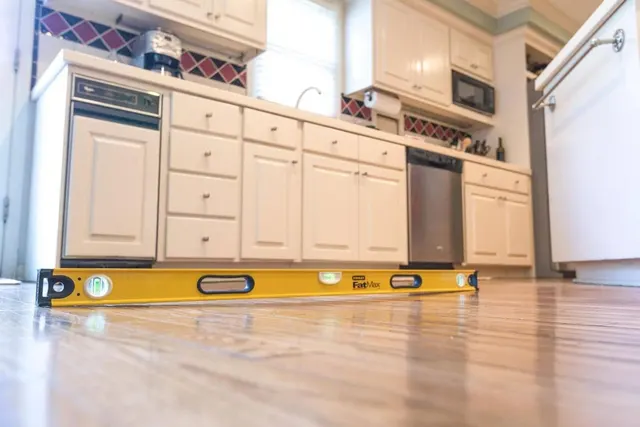
A floor that bounces, flexes, or feels noticeably springy underfoot is telling you that the structural system beneath it, the joists, support posts, beams, and blocking in your crawl space, is compromised. In Alabama's humid climate, the most common culprits are wood rot from persistent moisture, failed or deteriorated support posts, and structural wood damage from wood-destroying organisms. What feels like a minor bounce is actually the subfloor deflecting because the joists below have lost their rigidity. Left unaddressed, bouncing floors can progress to structural failure, the floor system can collapse under normal loading.
Alabama's climate, with summers averaging above 70% relative humidity and mild winters that keep crawl spaces from fully drying out, makes crawl space wood decay a persistent threat. Homes in the Birmingham area, Mobile, and Columbus GA with unconditioned crawl spaces and inadequate vapor barriers are especially vulnerable. Mobile's coastal humidity is particularly aggressive toward unprotected crawl space framing.
What Causes Bouncing or Springy Floors in Alabama Homes
Rotted Floor Joists from Crawl Space Moisture
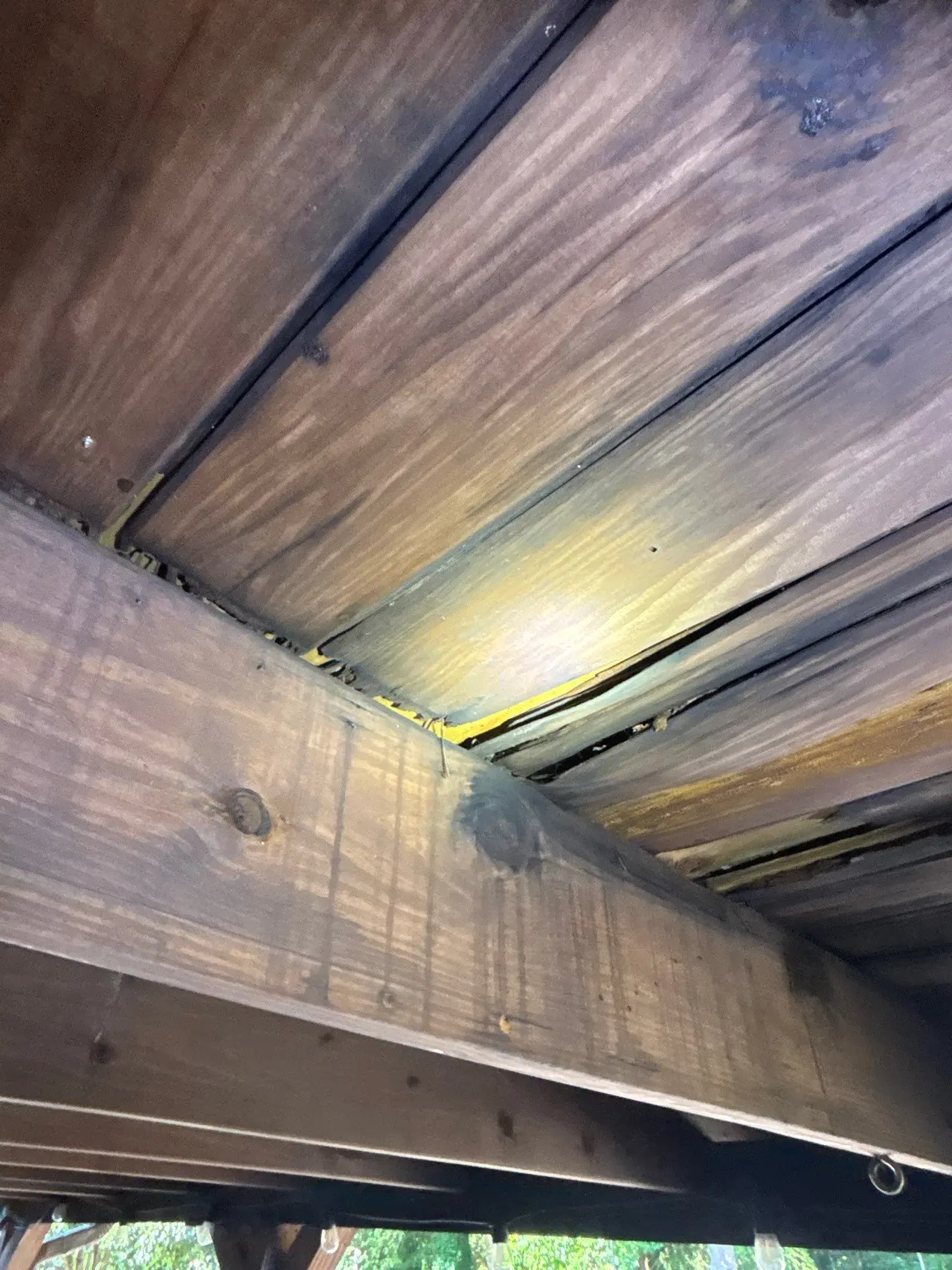
Alabama's high humidity and the tendency for crawl spaces to trap moisture creates ideal conditions for wood-destroying fungi. Once wood moisture content exceeds about 28%, rot fungi become active and begin breaking down the structural fibers of joists, sill plates, and subflooring. Severely rotted joists lose structural stiffness long before they visibly collapse.
Failed or Deteriorated Support Posts
Crawl space support posts, whether wood or adjustable steel, can fail over time from corrosion, decay, or improper original installation. When a support post settles, tips, or rots at the base, the beam or girder it carries drops slightly, and the floor above loses its support and begins to flex.
Undersized or Improperly Spanned Joists
Older Alabama homes are sometimes found with joists that were undersized for their span, or that were installed without adequate blocking. This creates floors that were borderline compliant at construction but become bouncy as the wood ages, dries, and loses some of its original rigidity.
Wood Damage from Insects
Subterranean termites and carpenter ants, both active in Alabama crawl spaces, damage the structural integrity of floor joists and subflooring. Termites hollow out wood from the inside, leaving a thin shell that looks intact until it collapses under load. The resulting loss of cross-section causes the floor system to deflect and bounce.
Signs You Should Not Ignore
- Floors that visibly deflect or bounce when you walk across them, especially in the middle of a room
- A soft, spongy feeling underfoot that is distinct from normal wood floor give
- Squeaking floors that have become significantly louder or more widespread over time
- Floors that feel different from one side of a room to the other, indicating localized structural loss
- Cracking or separation in floor tile in rooms over the crawl space
- Visible sag in the floor when viewed from a doorway across a room
- Crawl space inspection reveals visibly deteriorated joists, dark staining, or soft spots when probed with a screwdriver
- Support posts that are leaning, rusted through at the base, or sitting in standing water
How We Diagnose and Repair the Problem
- 1
Free On-Site Assessment
An APS technician visits your property, documents the symptom and severity, and reviews all related indicators to build a complete picture.
- 2
Root Cause Diagnosis
A Columbus, GA homeowner contacted APS after noticing the main hallway floor had developed a noticeable bounce and the bathroom tile had cracked. A crawl space inspection found three joists with advanced rot from years of high humidity and no vapor barrier. APS installed new support post systems and sister-joisted the damaged sections, restoring the floor to full rigidity. A crawl space encapsulation was recommended to prevent recurrence.
- 3
Written Estimate
You receive a clear written scope of work and cost estimate before any repair begins. No obligation.
- 4
Repair With Transferable Warranty
All APS foundation repairs carry a warranty that transfers to future owners. Serving Birmingham, Mobile, Huntsville, and Columbus, GA.
“A bouncing floor is not a quirk of an old house, it is the floor system telling you it has lost capacity. In Alabama crawl spaces, by the time you feel the bounce, you usually have rot or damage that has been building for years in the humidity down there.”
Frequently Asked Questions
How urgent is a bouncing floor? Can I wait to repair it?
Bouncing floors indicate that structural members have already lost significant load capacity. The floor is still functioning, but it is operating on reduced margin. The risk of waiting is that continued loading, furniture, foot traffic, concentrated loads, can accelerate the failure. We recommend an inspection as soon as you notice the symptom to determine how much structural capacity remains.
Can I just add more support posts myself?
Adding support without knowing the underlying cause can mask the problem without fixing it. If the joists themselves are rotted, adding a post under them helps temporarily but does not restore joist integrity. A thorough crawl space assessment identifies which structural members need replacement, sistering, or support, and which posts need to be properly sized and installed for long-term stability.
Will fixing the floor also fix the moisture problem causing it?
Structural repair and moisture control are two separate interventions, both of which are usually needed. Replacing rotted joists without addressing the moisture source means the new joists will eventually face the same conditions. APS addresses both the structural repair and the moisture management needed to protect the repair long-term.
How do I know if it is the joist or the subfloor that is the problem?
A crawl space inspection with probing of the structural members will identify whether the bounce is coming from joist deflection, subfloor deterioration, or a combination of both. This is not something that can be reliably determined from above, a crawl space assessment is the right diagnostic tool.