
What Broken Sidewalks Tell You About Your Concrete Leveling
Sidewalks break honestly: a panel edge drops or heaves, the joint becomes a step, and someone catches a toe on it. Because the panels are small, they respond to soil changes faster than driveways or patios. Tree roots lift them, root decay drops them, erosion strips the sand bed from under an edge, and freeze events pop shaded panels upward in north Alabama winters. The result is a walkway that reads level from the porch but carries half inch offsets you feel with every step. Grinding takes down a raised edge, foam lifting brings a sunken panel back up, and most walkways need a little of both. The material is almost always reusable. What failed is the bedding under it.
From Huntsville's freeze pops to Mobile's washouts, Alabama sidewalks move for different reasons by region but move everywhere. Clay creep on slopes and street tree roots account for most of the panel offsets APS levels across the state.
What Causes Broken Sidewalks in Alabama Homes
Tree Roots, Growing or Decaying
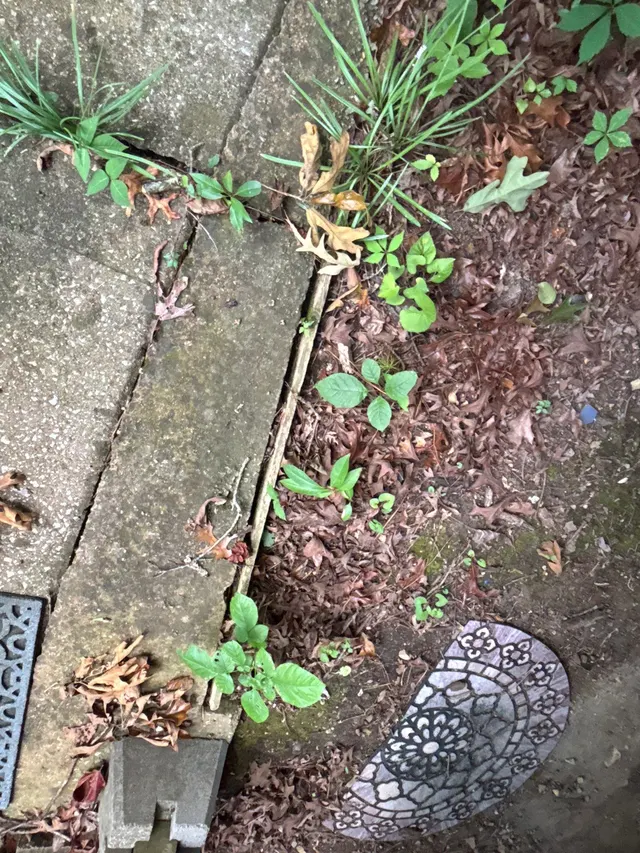
A growing root lifts a panel. A decayed one leaves a void that drops it. Sidewalks planted with street trees show both on the same run, which is why panel by panel assessment matters.
Bedding Erosion
The sand or fine gravel bed under sidewalk panels washes out from the joints and edges. The panel loses uniform support, rocks under foot traffic, and eventually cracks or settles.
Downhill Creep
Walkways on Alabama's clay slopes migrate slowly downhill as the clay cycles wet and dry. Joints open on the uphill side and panels tip out of plane.
Utility Trench Settlement
Panels poured over utility trenches settle as the trench backfill consolidates, dropping a run of sidewalk in a straight line along the trench path.
Signs You Should Not Ignore
- A raised or dropped edge at any joint, even a quarter inch
- Panels that rock or click underfoot
- Open joints collecting soil and weeds
- A run of panels settling in a straight line
- Water tracking along the walkway edge after rain
- Chipped joint edges where feet or mowers catch the offset
How We Diagnose and Repair the Problem
- 1
Free On-Site Assessment
An APS technician visits your property, documents the symptom and severity, and reviews all related indicators to build a complete picture.
- 2
Root Cause Diagnosis
APS lifts sunken panels with polyurethane foam through ports smaller than a bottle cap, grinds any remaining raised edges flush, and seals the joints. A typical residential walkway is walkable the same day. Where a tree root caused the movement, the assessment covers whether lifting alone holds or the root path needs addressing first.
- 3
Written Estimate
You receive a clear written scope of work and cost estimate before any repair begins. No obligation.
- 4
Repair With Transferable Warranty
All APS foundation repairs carry a warranty that transfers to future owners. Serving Birmingham, Mobile, Huntsville, and Columbus, GA.
“Sidewalk work is the most satisfying lift we do. Twenty minutes a panel, and a walkway that grabbed toes for years walks flat again before lunch.”
Frequently Asked Questions
How level does a sidewalk need to be?
A quarter inch offset at a joint is the common threshold where a walkway edge becomes a trip point. Anything at or past that is worth correcting, and smaller offsets are worth watching.
Lift or grind, which one applies?
Grinding suits a raised edge with solid bearing under it. Lifting suits a sunken panel with a void or washed bedding below. Many walkways need one panel lifted and a neighboring edge ground, and the estimate lays out which is which.
Can one panel be fixed without redoing the walkway?
Yes. Foam lifting is panel by panel work. There is no reason to replace a whole run for one settled section.
What happens if a sunken panel is ignored?
The offset grows, the open joint takes on more water, the bedding erodes further, and the panel eventually cracks. Early lifting is the smallest version of the repair.