
What Are Helical Tieback Anchors?
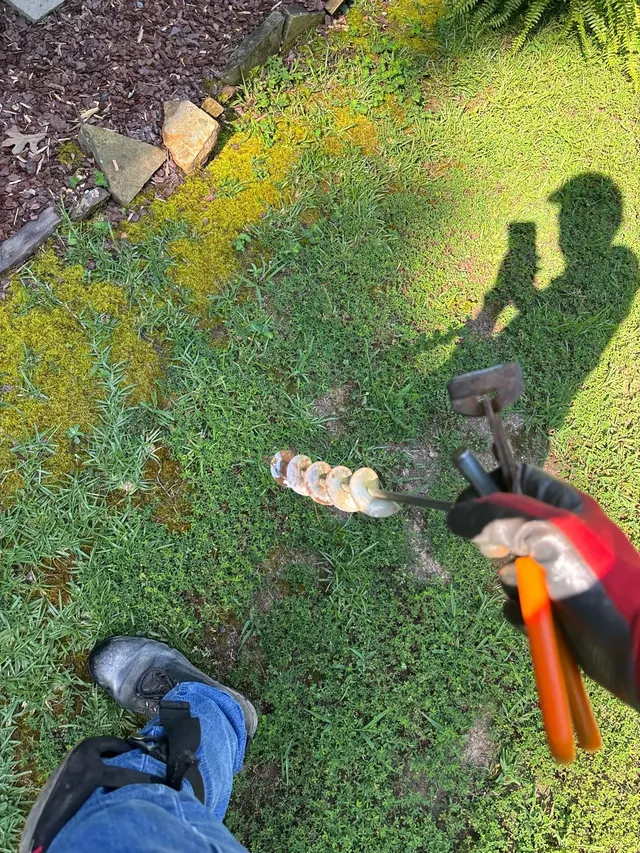
Helical tieback anchors are a powerful solution for bowing or inward-deflecting foundation walls in situations where standard wall anchor installation is not possible due to site constraints. Unlike wall anchors, which require buried exterior plates in the adjacent yard, helical tiebacks are installed entirely from inside the basement or crawl space. The tieback is drilled through the foundation wall at a downward angle into stable native soil, developing its resistance through the helical plates that engage competent soil at depth. APS Foundation installs helical tiebacks throughout Alabama and Columbus GA for walls where the site conditions rule out exterior access.
How Helical Tieback Anchors Work
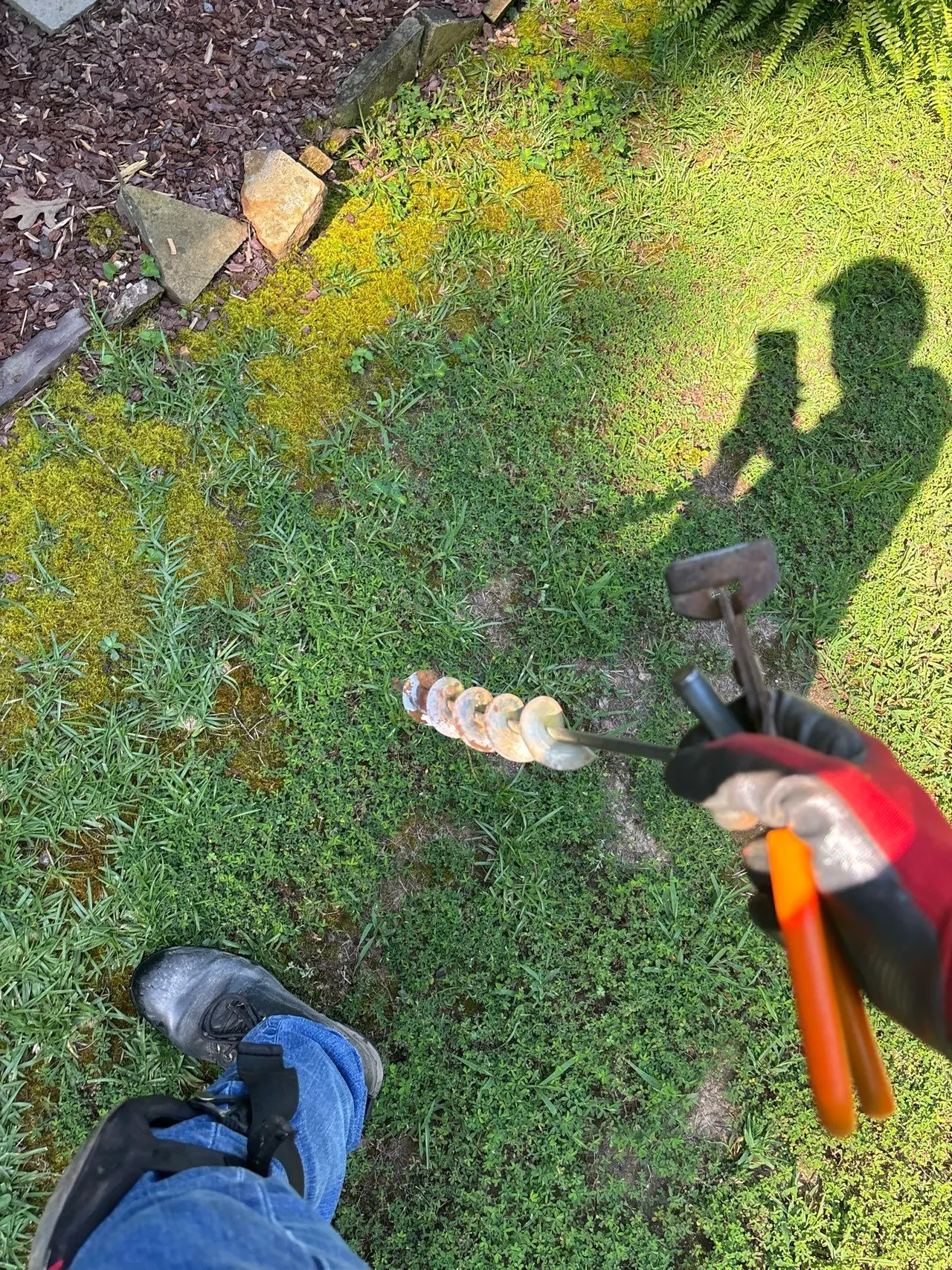
Helical tiebacks function on the same principle as wall anchors: they resist the lateral soil pressure that causes foundation walls to bow inward by anchoring the wall to stable ground. The critical difference is in how that anchor is established. Instead of a surface-accessible buried plate in the yard, helical tiebacks develop their resistance through helical plates that are advanced into the soil at an angle, engaging the soil's strength well beyond the active pressure zone that is causing the wall to move. Installation begins by cutting a small hole through the foundation wall at each tieback location. A hydraulic torque motor advances the tieback shaft through the hole at the specified angle, typically 15 to 30 degrees below horizontal. This downward angle ensures that as the helical plates advance, they are engaging deeper, more stable soil rather than the disturbed or saturated zone immediately adjacent to the wall. Installation torque is monitored continuously. As with helical pier installation, torque serves as a real-time indicator of the soil resistance the tieback plates are developing. Installation stops when the target torque confirms that the required anchor capacity has been achieved. Once all tiebacks are installed, a bearing plate is mounted against the interior wall surface at each location, and the assembly is tensioned to apply immediate lateral restraint to the wall. The wall is now anchored against further inward movement. In suitable conditions, periodic retensioning can gradually bring the wall back toward its original plumb position. Helical tiebacks are the solution of choice when walls border neighboring properties, paved areas, utilities, or other obstacles that prevent the standard wall anchor exterior plate from being properly positioned.
“When there is no room for exterior anchor plates, tiebacks solve the problem from the inside. Same concept of anchoring the wall to stable ground, but we never need to touch the yard.”
How APS Installs Helical Tieback Anchors
- 1
Free On-Site Assessment
An APS inspector evaluates the bowing wall, measures deflection, and reviews the site conditions to confirm that helical tiebacks are the appropriate solution given the access constraints present.
- 2
Wall Penetration
Small holes are core-drilled through the foundation wall at each tieback location and at the specified angle. These holes are only slightly larger than the tieback shaft diameter.
- 3
Torque-Monitored Advancement
A hydraulic torque motor advances the helical tieback through the wall and into the soil at the specified angle. Torque is monitored continuously and installation stops when the target capacity is confirmed.
- 4
Bearing Plate Installation
A steel bearing plate is mounted against the interior face of the wall at each tieback location, distributing the anchor load across the wall surface.
- 5
Tensioning
Each tieback is tensioned to apply immediate lateral restraint to the wall, counteracting the soil pressure causing the inward deflection.
- 6
Documentation and Warranty
Torque readings, installation angles, and depths are documented for each tieback. A warranty package is provided that covers both manufacturer and APS in-house performance warranties.
What Helical Tieback Anchors Cost and What Is Covered
Cost Range
$1,200 to $2,500 per tieback; most projects require 3 to 5 tiebacks.
Warranty
Manufacturer warranty plus APS in-house warranty, transferable to new owners at no additional cost.
Frequently Asked Questions
When would a tieback anchor be used instead of a standard wall anchor?
Tieback anchors are used when the exterior yard conditions make standard wall anchor installation impractical or impossible. Common situations include walls that border a neighboring property with no access easement, walls adjacent to paved driveways or walkways where excavation is not feasible, and walls where buried utilities prevent the exterior plate from being properly positioned.
Can tieback anchors straighten a bowing wall over time?
Yes. Helical tiebacks can be retensioned after installation, and periodic retensioning over time can gradually move the wall back toward its original position. The degree of recovery depends on the wall material, the severity of the deflection, and how consistently the retensioning schedule is followed.
Is there any yard disruption with tieback installation?
No yard disruption of any kind. Helical tiebacks are installed entirely from inside the structure. This is the defining advantage of tiebacks over standard wall anchors and the reason they are chosen when exterior access is restricted.
How does the torque monitoring work for tiebacks?
The relationship between installation torque and load capacity in helical anchors and piers is well-established in geotechnical engineering. As the helical plates rotate through the soil, the resistance the soil provides to that rotation is directly proportional to the bearing capacity the plates are developing. Our crew monitors this reading in real time and stops installation when the torque confirms the required anchor capacity has been achieved.