
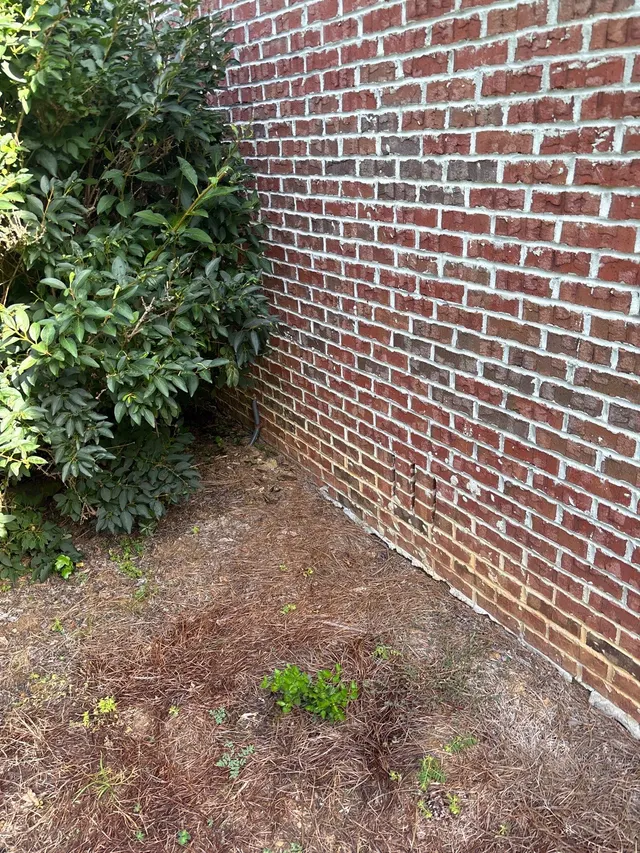
What Cracked Brick Veneer Exterior Tells You About Your Foundation Repair
Brick veneer cracks range from hairline mortar cracks that have been present since construction to wide stair-step patterns or through-brick splits that open rapidly. They may appear at corners, above windows, in long horizontal runs, or in diagonal patterns radiating from openings. Displacement, where one side of the crack sits higher than the other, is a key severity indicator.
Alabama's large stock of 1950s through 1980s brick-veneer homes, concentrated in Birmingham's over-the-mountain suburbs, Huntsville, and Mobile neighborhoods, provides APS with a steady volume of brick crack evaluations. Many of these homes were built without expansion joints, making thermal cracking a common finding alongside legitimate foundation concerns.
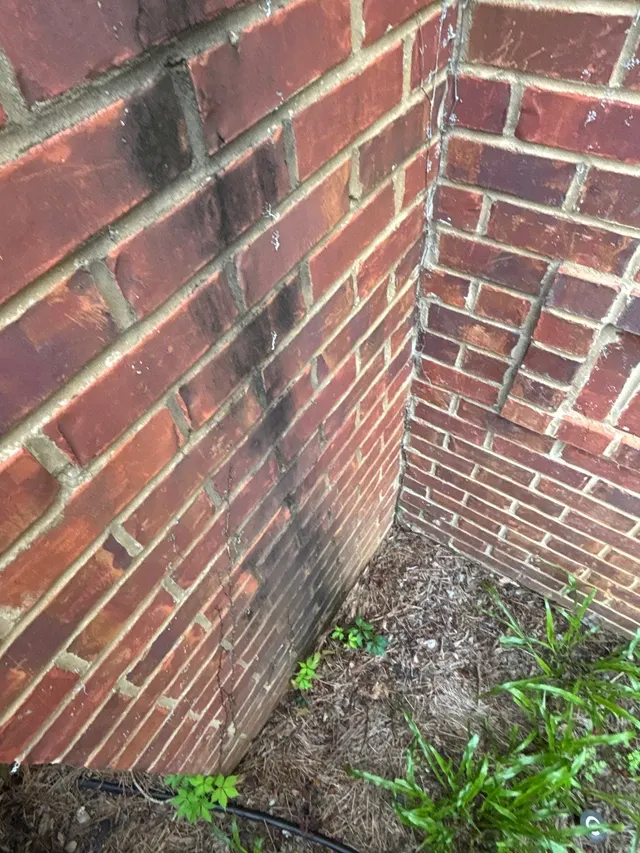
What Causes Cracked Brick Veneer Exterior in Alabama Homes
Foundation Settlement (Structural)
When the foundation beneath a brick-veneer wall drops or shifts, the veneer cracks to accommodate the movement. Stair-step patterns and wide diagonal cracks are the classic result. Alabama's active clay soils make this common.
Thermal Expansion (Often Cosmetic)
Brick expands in heat and contracts in cold. Without adequate expansion joints, which many older Alabama homes lack, the veneer cracks in predictable locations to relieve thermal stress. These cracks are typically uniform in width and do not accompany other foundation symptoms.
Drainage-Related Soil Movement
Downspouts discharging at the foundation and sloped grade concentrate water against the brick base, saturating the soil and triggering localized settlement or heave. The brick cracks directly above the affected area.
Brick Tie Failure
Brick veneer is attached to the structural wall behind it with metal ties. As these ties corrode, common in older Alabama homes, sections of veneer can separate from the backing wall and shift, cracking independently of the foundation.
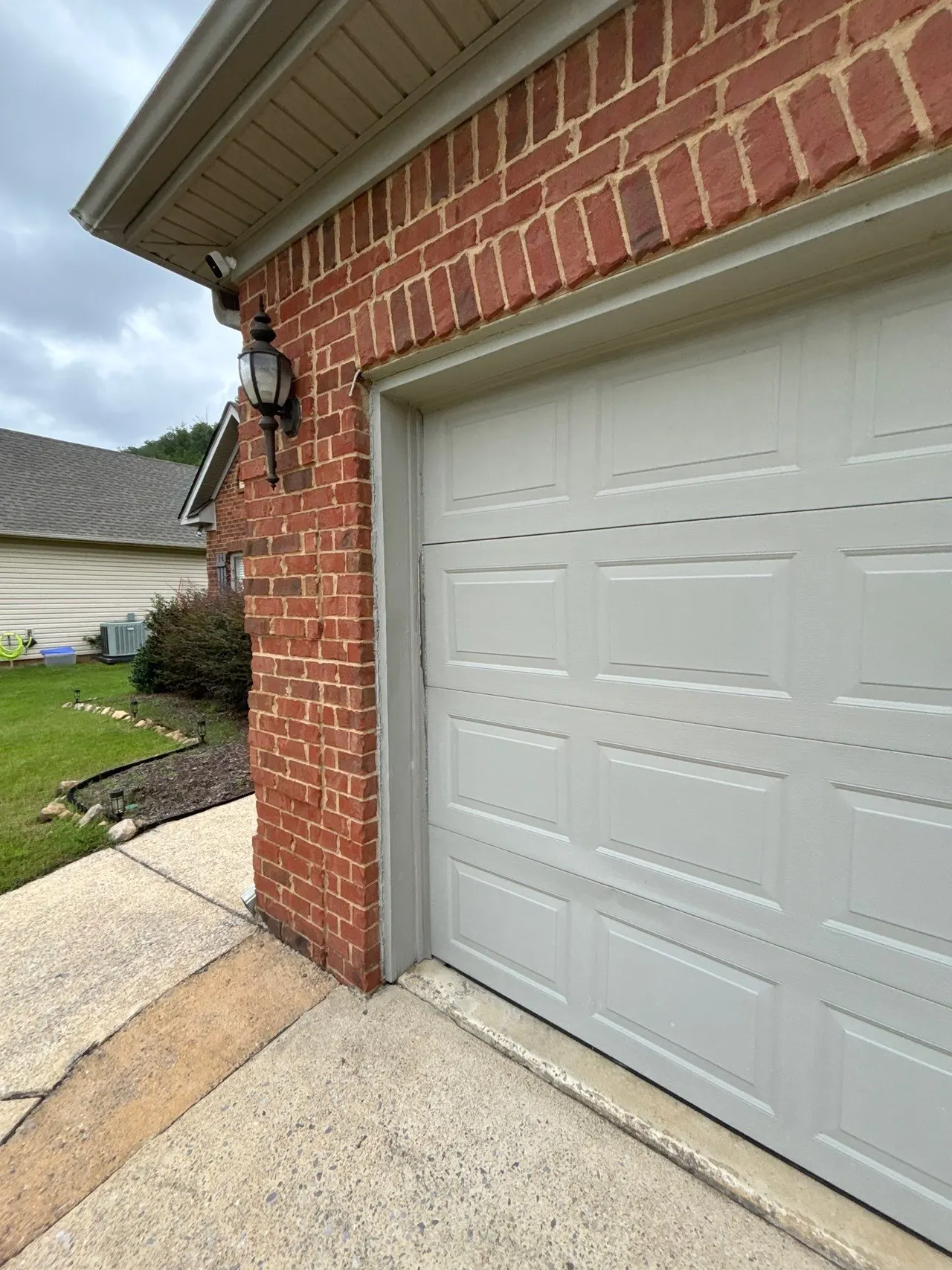
Signs You Should Not Ignore
- Stair-step cracks wider than 1/4 inch
- Displacement across the crack, one side higher or further out
- Horizontal cracks running across multiple courses of brick
- Cracks appearing in the same location after previous repairs
- Brick bulging or bowing outward in the cracked area
How We Diagnose and Repair the Problem
- 1
Free On-Site Assessment
An APS technician visits your property, documents the symptom and severity, and reviews all related indicators to build a complete picture.
- 2
Root Cause Diagnosis
Foundation settlement causing brick cracks is addressed with push piers or helical piers; thermal cracking is managed with proper expansion joints and tuck-pointing.
- 3
Written Estimate
You receive a clear written scope of work and cost estimate before any repair begins. No obligation.
- 4
Repair With Transferable Warranty
All APS foundation repairs carry a warranty that transfers to future owners. Serving Birmingham, Mobile, Huntsville, and Columbus, GA.
“In Alabama, almost every brick home eventually gets some cracking, the question is always whether the foundation moved or the brick just expanded and had nowhere to go. The pattern and displacement are what tell the story.”
Frequently Asked Questions
How do I know if my brick cracks are cosmetic or structural?
Cosmetic cracks are typically hairline, uniform in width along their length, and not accompanied by other symptoms like sticking doors or sloping floors. Structural cracks are wider (especially at one end), show displacement, occur in a stair-step pattern, or appear alongside other foundation symptoms. When in doubt, APS provides a free assessment.
Can cracked brick be repaired without fixing the foundation?
If the cause is cosmetic, thermal movement or minor original settling, tuck-pointing and expansion joint installation may be the entire solution. If the cause is active foundation settlement, repairing the brick before addressing the foundation means the cracks will return. APS evaluates the cause before recommending repair.
Are horizontal brick cracks worse than stair-step cracks?
Horizontal cracks through brick or mortar courses typically indicate significant lateral pressure, often from soil pushing against the foundation below, and are generally more severe than stair-step cracks. Any horizontal brick crack should be evaluated promptly.
Will my homeowner's insurance cover brick crack repair?
Standard policies generally exclude settlement and earth movement. If the damage resulted from a sudden, covered peril (such as a plumbing failure that eroded soil), coverage may apply. APS can provide documentation for the structural cause to support your claim review.