

What Cracked Concrete Tells You About Your Concrete Leveling
Not every crack means settlement. Concrete shrinks as it cures, and hairline surface cracks are cosmetic. The cracks that matter change over time: they widen, one side lifts or drops relative to the other, and they run in from a slab edge or corner where water exits. That pattern says the slab lost bearing and broke over a void. Patching a settlement crack treats the symptom. The unsupported span is still unsupported, so the patch cracks again, usually within a season. Filling the void with structural foam restores bearing, stops the movement, and only then is sealing the crack worth doing. In Alabama the crack season follows the weather: long saturations wash soil out, then drought shrinks the clay, and slabs crack over the gap between the two.
Central Alabama slabs crack on a weather schedule: saturation events wash fill out from under edges, late summer drought shrinks the clay, and the span in between breaks. The nine day March 2026 saturation event produced a visible wave of settlement cracks across the metro areas.
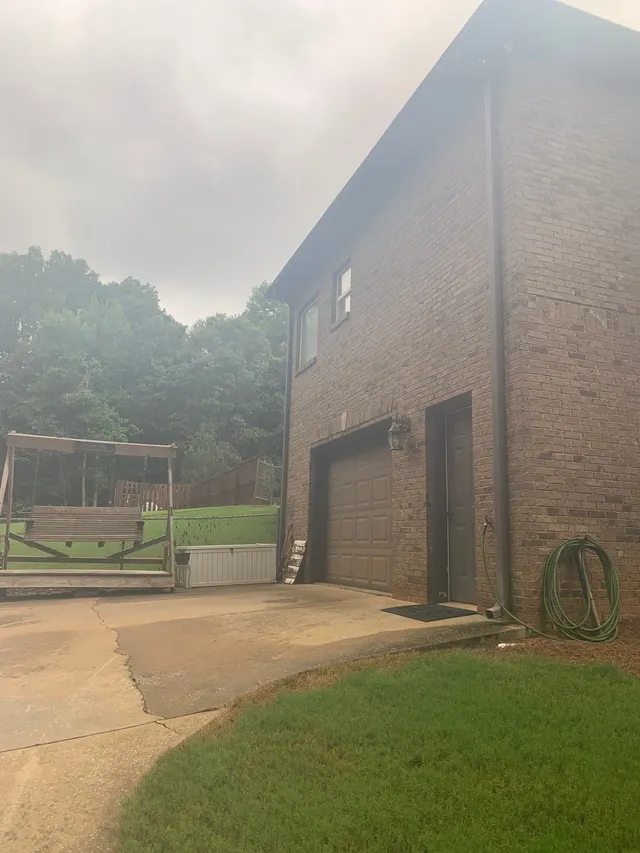
What Causes Cracked Concrete in Alabama Homes
Voids From Soil Washout
Water moving under a slab carries soil with it. The slab bridges the gap for a while, then cracks over the unsupported span. The crack line usually maps the void edge.
Settlement Under Load
Driveways and garage slabs carry vehicles. When fill under the wheel path consolidates, the loaded area drops and the crack forms where supported concrete meets unsupported.
Seasonal Clay Movement
Expansive clay lifts and drops the slab through the year. Concrete tolerates the ride until the differential between one edge and the other exceeds what it can bend, then it cracks.
Curing Shrinkage, the Harmless Kind
Uniform hairline cracks that never change width and have no vertical offset are usually curing shrinkage. Worth watching, rarely worth treating. An assessment tells the two kinds apart.
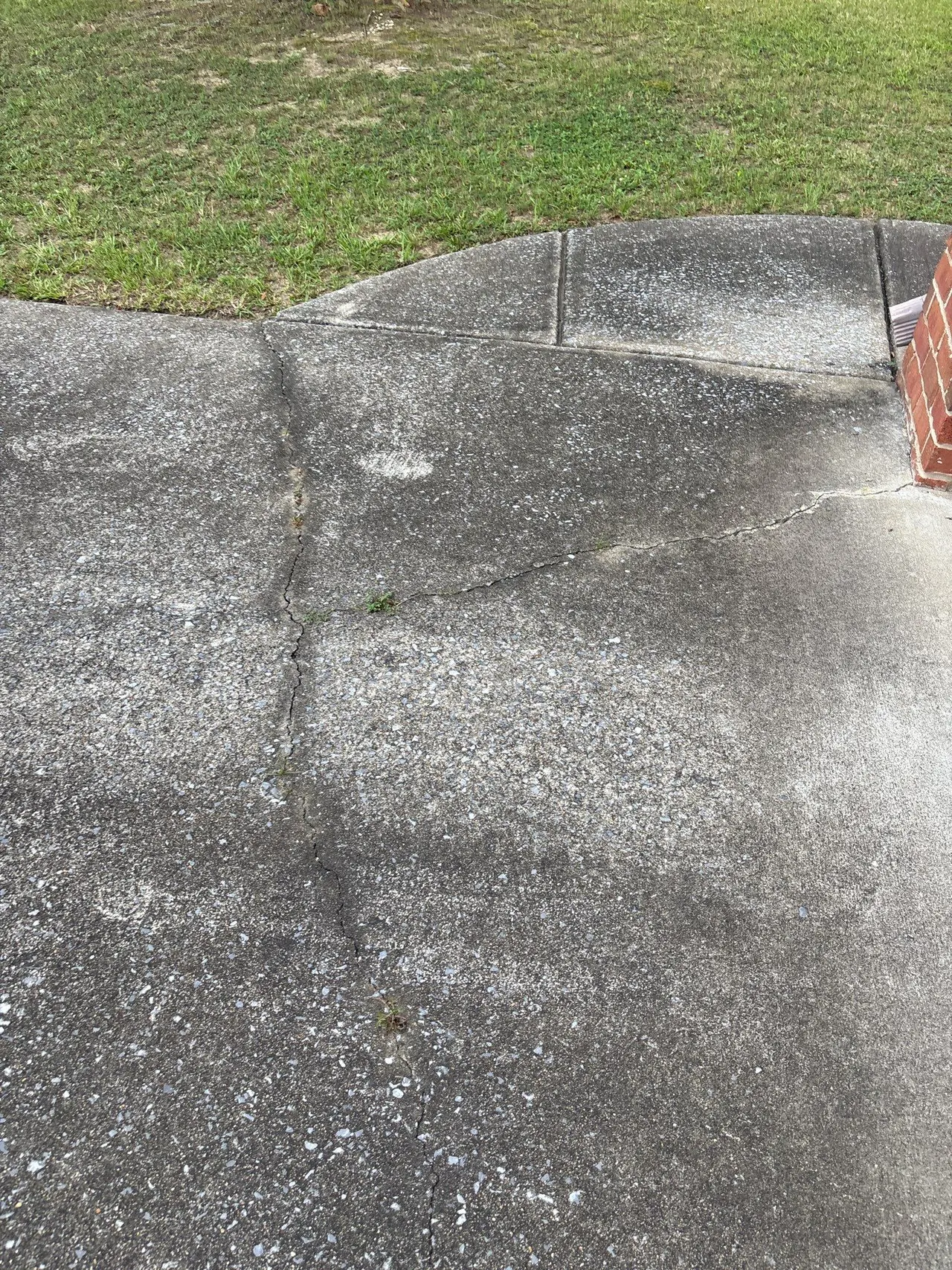
Signs You Should Not Ignore
- One side of the crack sits higher than the other
- The crack widens season over season
- It runs in from an edge, corner, or downspout discharge point
- A previously patched crack has reopened along the same line
- The slab sounds hollow near the crack
- New cracks branching off the original
How We Diagnose and Repair the Problem
- 1
Free On-Site Assessment
An APS technician visits your property, documents the symptom and severity, and reviews all related indicators to build a complete picture.
- 2
Root Cause Diagnosis
APS maps the void with a soil probe and slab sounding, injects polyurethane foam to restore bearing, and lifts the cracked sections back into plane. Once the slab stops moving, the crack is cleaned and sealed so water stops feeding the void. On driveways the usual companion fix is redirecting the downspout or grading that fed water under the slab in the first place.
- 3
Written Estimate
You receive a clear written scope of work and cost estimate before any repair begins. No obligation.
- 4
Repair With Transferable Warranty
All APS foundation repairs carry a warranty that transfers to future owners. Serving Birmingham, Mobile, Huntsville, and Columbus, GA.
“A crack is information. It tells you where the slab lost its bearing. Seal it without fixing the bearing and the slab writes the same message again, one inch to the left.”
Frequently Asked Questions
Is every cracked slab a settlement problem?
No. Uniform hairline cracks with no height difference across them are usually curing shrinkage and cosmetic. Cracks with vertical offset, growth over time, or a hollow sounding slab nearby point to a void and are worth an assessment.
Why did my patched crack come back?
The patch filled the line but not the void under it. The unsupported span kept flexing and broke the patch. Restoring bearing first is what makes a crack repair last.
Does leveling close the crack?
Lifting often narrows the crack as the slab returns to plane, but the line itself stays and gets sealed. The goal of leveling is stopping the movement that created it.
What does APS check during the free assessment?
Crack pattern and offset, slab sounding for voids, grade and downspout paths, and the joint condition around the affected panels. You get a written recommendation, not a guess.