
What Tripping Hazards Tell You About Your Concrete Leveling
Most trip points hide in plain sight because they grow slowly. The walkway joint that catches a shoe once a month, the patio step that changed height, the garage apron lip you learned to step over. Each one is a slab moving relative to its neighbor, and the seasonal soil cycle keeps it moving. Guests, older family members, and delivery drivers do not know where the lips are. Homeowners feel the liability without naming it. The fix is mechanical and quick: lift the low side or grind the high side until the surfaces meet in plane. An assessment walks the whole property, because a house with one trip point usually has three, made by the same soil doing the same thing in different places.
Alabama's shrink and swell clay keeps residential concrete in slow motion year round, so trip points regenerate wherever soil movement goes unaddressed. Leveling plus joint sealing stops the cycle at each corrected joint.
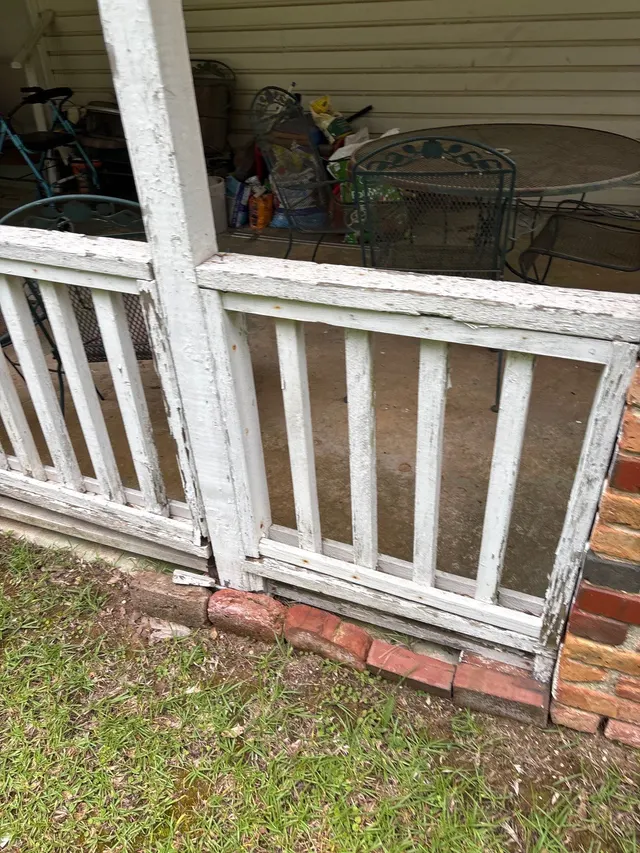
What Causes Tripping Hazards in Alabama Homes
Differential Slab Settlement
Two panels sharing a joint settle at different rates when the soil under one moves. The joint becomes a step. This is the single most common trip point APS levels.
Heaved Edges
Roots and swelling clay push panel edges upward. The raised lip catches toes in the direction of travel, and grinding it flush is often the whole repair.
Settled Step and Stoop Junctions
Where a poured stoop or step meets a walkway, the two settle at different rates and open a height difference exactly where feet land.
Apron and Threshold Drops
Garage aprons and door thresholds settle away from the fixed slab behind them, leaving a lip in the busiest path on the property.
Signs You Should Not Ignore
- Any joint you have learned to step over without thinking
- Scuff marks or chipped edges at one joint
- A step whose rise feels different from the others
- Family or guests stumbling at the same spot
- Pooled water marking a low panel on a walking path
- A lip at the garage apron or porch landing
How We Diagnose and Repair the Problem
- 1
Free On-Site Assessment
An APS technician visits your property, documents the symptom and severity, and reviews all related indicators to build a complete picture.
- 2
Root Cause Diagnosis
APS walks the property and levels every offset found: polyurethane foam lifts the sunken sides, grinding brings raised edges flush, and joints get sealed where open joints caused the movement. Most whole property corrections finish in a day, and every corrected joint is walkable immediately.
- 3
Written Estimate
You receive a clear written scope of work and cost estimate before any repair begins. No obligation.
- 4
Repair With Transferable Warranty
All APS foundation repairs carry a warranty that transfers to future owners. Serving Birmingham, Mobile, Huntsville, and Columbus, GA.
“Every property walk finds one the homeowner knew about and two they did not. Feet learn the lips and step over them automatically. Guests do not get that training.”
Frequently Asked Questions
How big does an offset need to be to matter?
A quarter inch is the widely used threshold for a walkway trip point. Toe catch happens at surprisingly small lips, and offsets only grow with the seasons.
Is this a homeowner liability issue?
A walkway offset on your property is your walkway. APS is not a legal advisor and does not give liability opinions, but leveling known trip points is inexpensive compared to what they risk, and most homeowners sleep better with them gone.
Grinding or lifting, how is it chosen?
By what moved. A raised edge over solid ground grinds flush in minutes. A sunken panel over a void needs lifting so the fix holds. The free assessment marks each point with its method.
How fast is the work?
Individual joints take minutes to grind or under an hour to lift. A full property with several trip points is typically one visit.