

What Basement Flooding Tells You About Your Basement Waterproofing
Basement flooding shows up as standing water on the floor, water tracking down a wall, or a soaked perimeter after heavy rain. In Alabama and along the Gulf Coast, it usually appears during or right after a downpour, then recedes, which tells you the cause is water pressure building in saturated soil rather than a plumbing leak. Recurring flooding steadily damages finishes, framing, and stored belongings, and keeps the space too damp to use.
Alabama's expansive clay holds water against foundations, and Gulf Coast Mobile sees over 65 inches of rain a year with a high water table. Both conditions drive hydrostatic pressure, making rain-driven basement flooding a recurring problem APS is called to solve across its markets.
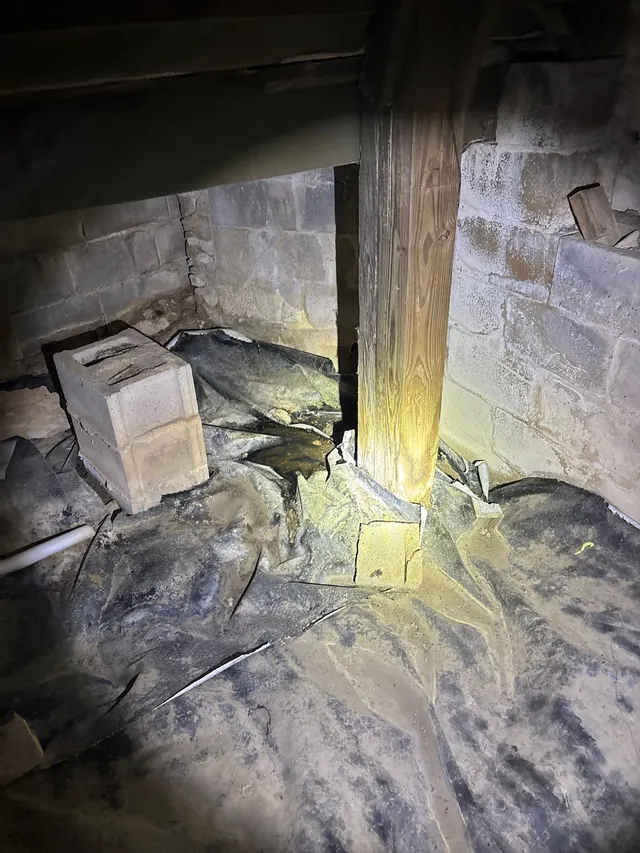
What Causes Basement Flooding in Alabama Homes
Hydrostatic Pressure
When heavy Alabama rain saturates the clay around a foundation, water has nowhere to drain and builds pressure against the walls and floor. That pressure forces water through cracks, the floor-to-wall joint, and porous block. It is the most common driver of basement flooding in the region's wet season.
Poor Exterior Drainage
Downspouts that dump at the foundation, ground that slopes toward the house, and clogged or absent yard drainage all concentrate rainwater against the basement wall. The water table right at the wall rises with every storm and finds its way in.
No Interior Drainage or Sump System
A basement without an interior perimeter drain and sump pump has no managed path to remove water that reaches the footing. Once water arrives, it simply pools on the floor instead of being collected and pumped out.
Wall and Floor-Joint Entry Points
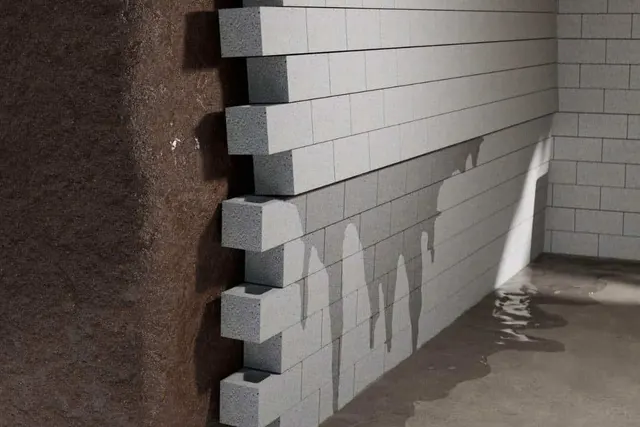
Cracks in poured walls, open mortar joints in block, and the cove joint where the floor meets the wall are the actual openings water uses. Sealing symptoms without managing the water pressure behind them rarely holds.
Signs You Should Not Ignore
- Water appears during or just after heavy rain, then drains away
- The floor-to-wall joint is wet or actively seeping
- Staining or a water line on the lower walls
- Efflorescence, the white mineral crust, on block or concrete
- A musty smell that returns every wet season
How We Diagnose and Repair the Problem
- 1
Free On-Site Assessment
An APS technician visits your property, documents the symptom and severity, and reviews all related indicators to build a complete picture.
- 2
Root Cause Diagnosis
A managed system stops recurrence: an interior perimeter drain and sump pump collect and remove water that reaches the footing, while exterior grading, downspout extensions, and yard drainage reduce how much water reaches the wall in the first place.
- 3
Written Estimate
You receive a clear written scope of work and cost estimate before any repair begins. No obligation.
- 4
Repair With Transferable Warranty
All APS foundation repairs carry a warranty that transfers to future owners. Serving Birmingham, Mobile, Huntsville, and Columbus, GA.
“Basement flooding is almost always a water-management problem, not a mystery. We find the path the water takes and give it somewhere to go besides your floor.”
Frequently Asked Questions
Why does my basement only flood when it rains hard?
That pattern points to hydrostatic pressure, not plumbing. Heavy rain saturates the clay soil around the foundation, pressure builds against the walls and floor, and water is pushed through any opening. When the soil drains, the flooding stops, which is the signature of a drainage and pressure problem.
Can I just seal the cracks myself?
Sealing a crack addresses one opening but not the water pressure behind the wall. If the water still has nowhere to go, it finds the next weak point. Lasting results come from managing the water with interior drainage and a sump, plus reducing what reaches the wall from outside.
Is basement flooding a structural risk or just a nuisance?
Both. Beyond ruining finishes and belongings, repeated saturation weakens framing, feeds mold, and the same soil water pressure that floods the basement can bow or crack the walls over time. Addressing it protects the structure, not just the space.
What does APS actually do on a flooding basement?
We inspect to find where and why water enters, then design a system: typically an interior drain and sump to manage water that arrives, and exterior measures like grading and downspout extensions to cut the volume. You get a written plan and estimate with no obligation.