
What High Energy Bills Tell You About Your Crawl Space Repair
Rising or unusually high energy bills, uneven room temperatures, and floors that feel cold or clammy can all trace to an open, humid crawl space. Because of the stack effect, conditioned air escaping upstairs pulls damp crawl space air into the home, so the HVAC constantly reconditions humid air and reheats or recools spaces above a poorly sealed crawl space. In Alabama's climate, dehumidifying that extra moisture and conditioning that leaked air is a real, ongoing energy cost until the crawl space is sealed.
In Alabama's hot, humid climate, cooling systems spend much of their energy removing moisture, so an open, humid crawl space is a real and ongoing cost for homes across Birmingham, Huntsville, Mobile, and Columbus, Georgia.
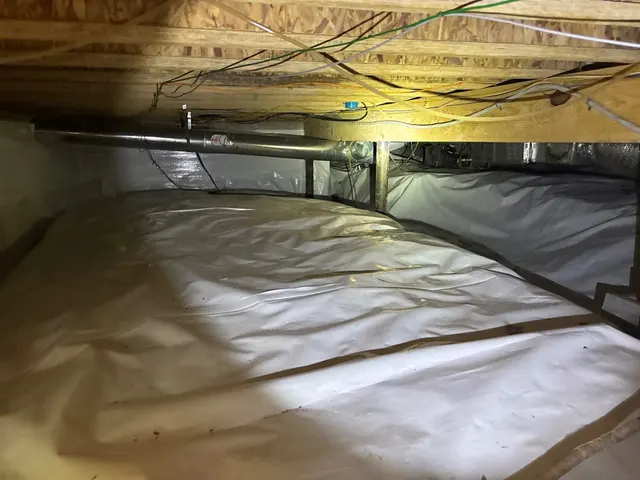
What Causes High Energy Bills in Alabama Homes
The Stack Effect Pulling In Humid Air
Air leaving the top of a house pulls replacement air up from the crawl space. When that air is humid and unconditioned, the HVAC has to recondition it continuously, which drives up energy use.
Humidity Forcing the Air Conditioner to Work Harder
Removing moisture is a large part of what cooling does in Alabama. A crawl space feeding humid air into the home makes the system run longer and harder to keep up, raising the bill.
Deteriorated or Missing Insulation
Wet, fallen crawl space insulation no longer slows heat transfer, so conditioned rooms lose comfort to the crawl space and the system compensates with more runtime.
Open Vents Losing Conditioned Comfort
Traditional vents leave the crawl space at outdoor temperature and humidity, so the floors above lose comfort to it and the HVAC works to make up the difference.
Signs You Should Not Ignore
- Energy bills climbing without a change in usage
- Cold or clammy floors over the crawl space
- Uneven temperatures room to room
- HVAC running longer to hold humidity and temperature
- A damp or musty feel in the home
How We Diagnose and Repair the Problem
- 1
Free On-Site Assessment
An APS technician visits your property, documents the symptom and severity, and reviews all related indicators to build a complete picture.
- 2
Root Cause Diagnosis
Sealing the crawl space is what lowers the load: encapsulation and a vapor barrier close it off from outside air and ground moisture, a dehumidifier controls humidity, and proper insulation keeps conditioned comfort in, so the HVAC stops fighting the crawl space.
- 3
Written Estimate
You receive a clear written scope of work and cost estimate before any repair begins. No obligation.
- 4
Repair With Transferable Warranty
All APS foundation repairs carry a warranty that transfers to future owners. Serving Birmingham, Mobile, Huntsville, and Columbus, GA.
“An open crawl space is like leaving a humid window open under your whole house. Seal it and the HVAC finally stops fighting.”
Frequently Asked Questions
Can my crawl space really affect my energy bill?
Yes, meaningfully. Through the stack effect your home pulls air up from the crawl space, so an open, humid crawl space makes your HVAC recondition damp, unconditioned air all day. Sealing it removes that continuous load.
How does sealing the crawl space save energy?
Encapsulation closes the space off from outdoor humidity and ground moisture, so the air drawn upstairs is already dry and closer to indoor conditions. The HVAC runs less to control humidity and temperature, which lowers the bill.
Will it also make the house more comfortable?
Usually yes. Homeowners often notice warmer floors, steadier room temperatures, and less of a damp feel after encapsulation, alongside the energy savings.
What does APS do to reduce the crawl space energy load?
We seal and encapsulate the crawl space, add a vapor barrier and dehumidification, and address insulation. The space becomes part of the home's conditioned envelope. You get a written plan and a free estimate.