
What Is Drainage Matting?
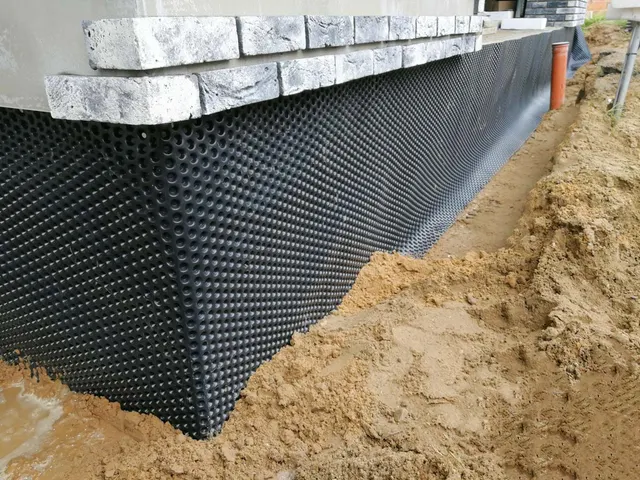
Drainage matting is a dimpled plastic layer installed on the crawl space floor beneath the vapor barrier to create a continuous drainage plane. Its raised dimples form small channels that let any water reaching the floor flow freely toward the perimeter drain and sump, rather than collecting in low spots under the liner. In Alabama crawl spaces with groundwater or an uneven dirt floor, matting is what makes encapsulation and drainage work together: the sealed liner keeps moisture out of the air, and the matting underneath ensures any water that does arrive is carried away. APS uses it as part of a complete encapsulation and drainage system where water intrusion is a factor.
How Drainage Matting Works
The dimpled matting is laid across the crawl space floor with its raised side creating an air-and-water gap between the ground and the vapor barrier above it. Water that enters at the soil finds the channels between the dimples and flows along them, following the floor slope to the perimeter drain, which carries it to the sump for removal. Because the water moves beneath the sealed liner and out to the drainage system, it never pools against the barrier or evaporates into the crawl space, keeping the encapsulated space dry.
“Matting is the quiet part of encapsulation. It builds a drainage channel right into the floor so water has somewhere to go under the liner.”
How APS Installs Drainage Matting
- 1
Prepare the Floor
APS clears and grades the crawl space floor as needed so the matting sits properly and channels water toward the drain.
- 2
Install the Drainage Plane
Dimpled matting is laid across the floor, dimples down, creating the drainage channels beneath where the liner will go.
- 3
Tie Into the Perimeter Drain
The matting is connected to the perimeter drainage so water it collects flows to the drain and sump.
- 4
Cover With the Vapor Barrier
The sealed vapor barrier is installed over the matting, keeping ground moisture out of the air while water moves beneath it.
- 5
Verify Flow to the Sump
APS confirms that water reaching the floor is channeled to the drain and removed by the sump.
What Drainage Matting Costs and What Is Covered
Cost Range
Cost depends on the crawl space size, access, and system specified. APS provides a free written estimate after the assessment.
Warranty
APS in-house workmanship warranty plus manufacturer warranties on system components, both fully transferable to future owners
Frequently Asked Questions
What does drainage matting do that a vapor barrier does not?
The vapor barrier seals moisture out of the air, but water can still reach the floor from the soil. The matting under it creates channels so that water flows to the drain and sump instead of pooling under the liner. They work as a pair.
Do I need matting in every crawl space?
Not always. It is most useful where groundwater reaches the floor or the dirt floor is uneven. In a drier crawl space, a vapor barrier and drainage may be enough. APS recommends it where water intrusion is a real factor.
Does the matting connect to the sump?
Yes, indirectly. The matting channels water to the perimeter drain, which carries it to the sump for removal. It is one integrated system that keeps the encapsulated floor dry.
Will it hold up under the vapor barrier?
Yes. The matting is a durable plastic product designed to sit permanently beneath the liner and support foot traffic during service, while maintaining the drainage gap over time.