
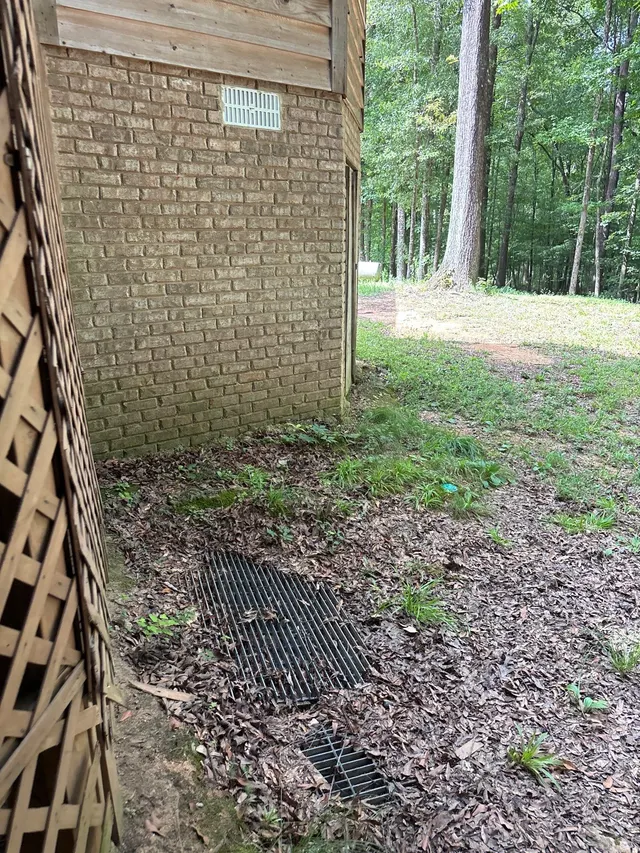
What Are Surface Drains?
Surface drains capture water at ground level, before it soaks into the soil around the foundation and finds its way into the crawl space. Where a yard sheds runoff toward the house or water collects in low spots, surface drains such as channel drains and catch basins intercept it and route it to a safe outlet. In Alabama's heavy rains, cutting the volume of water reaching the foundation is one of the most effective ways to keep a crawl space dry, and APS uses surface drains as the outdoor, first-line part of a complete water-management plan alongside grading, downspout work, and interior crawl space drainage.
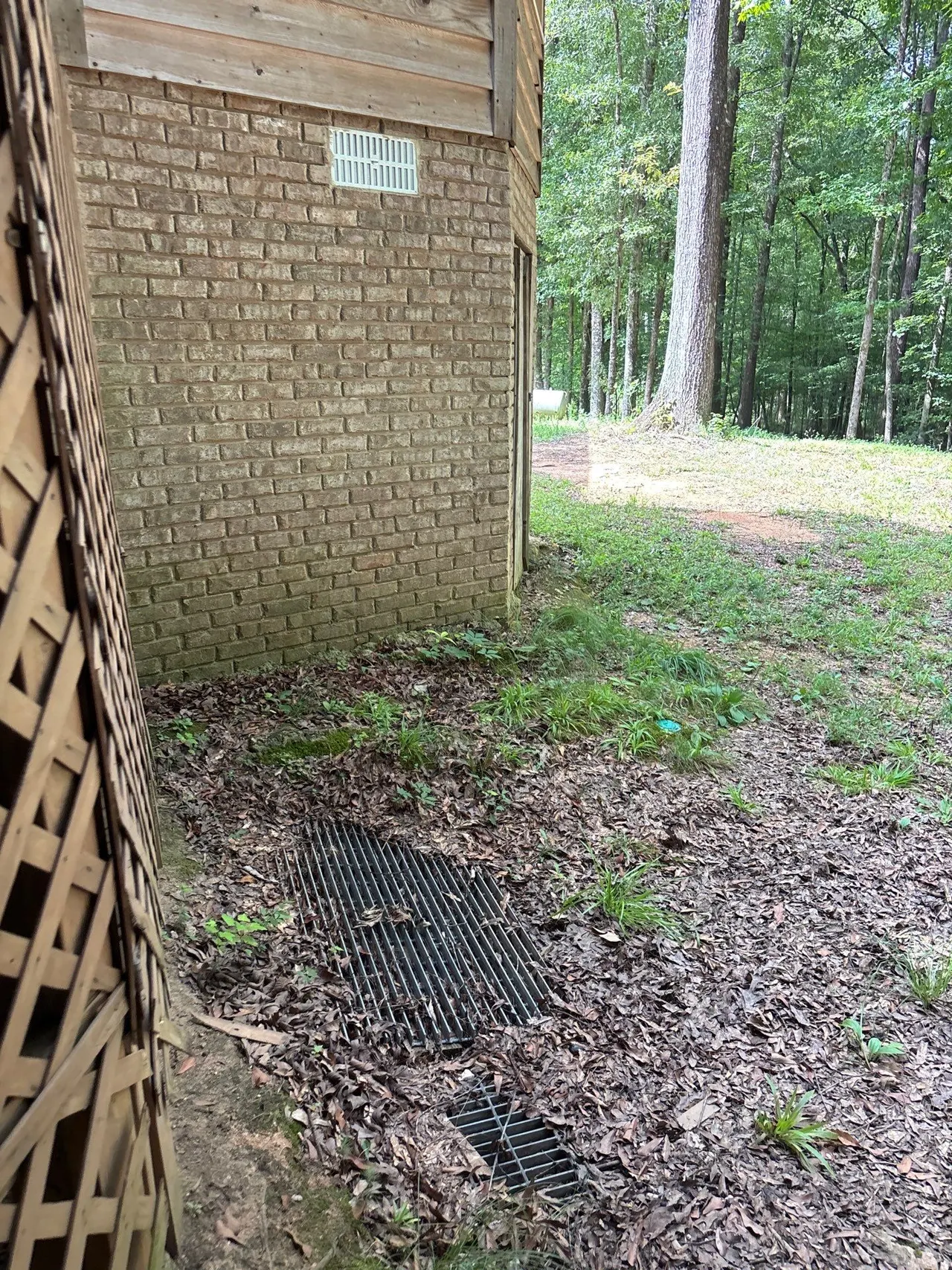
How Surface Drains Work
Channel drains and catch basins are placed where water runs or pools, capturing it at the surface before it can saturate the soil next to the foundation. The inlets connect to buried solid pipe that carries the water by gravity to a discharge point away from the house. By removing runoff at the source, surface drains lower the water load on the foundation soil, which reduces the groundwater and seepage that drive crawl space moisture and standing water.
“The cheapest gallon of water to deal with is the one you stop at the surface before it ever gets to the crawl space.”
How APS Installs Surface Drains
- 1
Map Runoff and Low Spots
APS observes where water flows and collects around the home and sets the drain locations and outlet route.
- 2
Install Inlets
Channel drains and catch basins are set at the runoff paths and low spots that collect the most water.
- 3
Run Pipe to the Outlet
Buried solid pipe is trenched from the inlets to a discharge point with continuous slope for reliable flow.
- 4
Establish the Discharge
The outlet is finished at a safe distance from the foundation so the water leaves the area.
- 5
Restore and Verify
Surfaces are restored and APS confirms water flows to the outlet as designed.
What Surface Drains Cost and What Is Covered
Cost Range
Cost depends on the crawl space size, access, and system specified. APS provides a free written estimate after the assessment.
Warranty
APS in-house workmanship warranty plus manufacturer warranties on system components, both fully transferable to future owners
Frequently Asked Questions
How are surface drains different from a French drain?
Surface drains capture water at ground level as it runs or pools, while a French drain collects groundwater below the surface. Many properties benefit from both, and APS combines them based on where your water is coming from.
Will surface drains alone keep my crawl space dry?
They reduce how much water reaches the foundation, which is a major help, but if water is already entering the crawl space, APS pairs surface drains with interior crawl space drainage and a sump so both the outside and inside water are managed.
Where does the captured water go?
Through buried pipe to a safe outlet away from the foundation, such as a downslope daylight point or a drainage system, so it does not run back toward the house.
Do surface drains clog?
They need occasional clearing of leaves and debris at the inlets, but a properly sloped system with the right inlets stays functional with minimal upkeep. APS sizes and places them to shed debris and flow freely.