
What Sinking or Settling Driveway Tells You About Your Concrete Repair
A sinking or settling driveway shows up as one or more slab sections sitting lower than the rest, a dip near the garage or street, or panels tilting toward the house. It happens when the soil supporting the slab loses volume, from erosion, poor original compaction, or washout, leaving voids the concrete then drops into. In Alabama's clay soils that shrink, swell, and wash with the weather, driveways commonly settle at the joints and edges, creating trip points, water-pooling low spots, and a slab that keeps dropping until the void beneath it is filled and the slab relifted.
Alabama's expansive clay and heavy rain wash and consolidate the soil under driveways, so sinking and settling driveway slabs are one of the most common concrete calls APS gets across Birmingham, Huntsville, Mobile, and Columbus, Georgia.
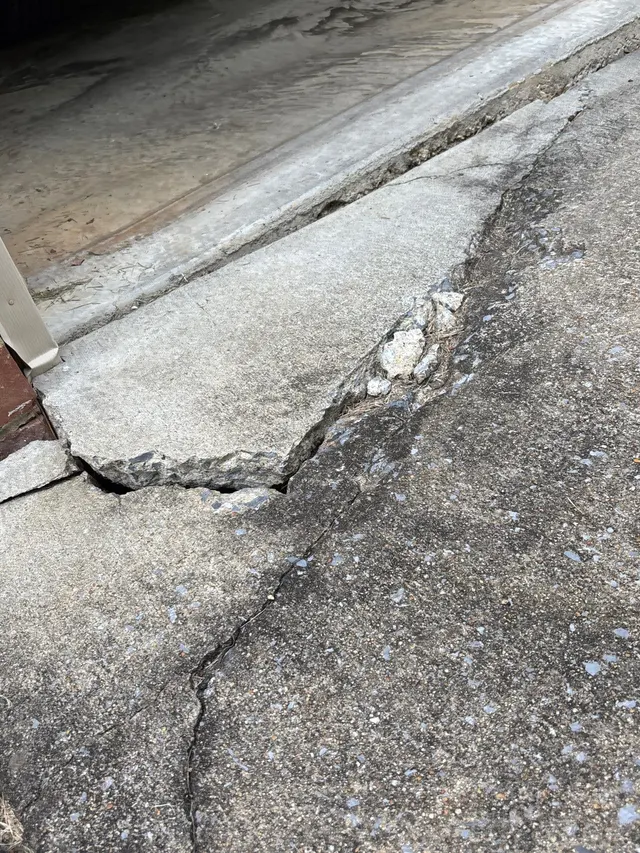
What Causes Sinking or Settling Driveway in Alabama Homes
Washed-Out or Eroded Soil
Water running under or alongside the driveway carries away the supporting soil over time, leaving voids the slab settles into. Downspouts and poor drainage near the driveway accelerate it.
Poorly Compacted Fill
Driveways poured over fill that was never properly compacted settle as that loose soil consolidates under the weight of the slab and vehicles.
Expansive Clay Movement
Alabama's clay soils shrink in drought and swell with rain. That repeated movement works voids and settlement under a driveway slab season after season.
Tree Roots and Soil Disturbance
Nearby tree roots and prior excavation disturb and displace the soil beneath a driveway, contributing to uneven settlement.
Signs You Should Not Ignore
- A driveway section sitting lower than the rest
- A dip near the garage door or the street
- Water pooling on the driveway after rain
- Slabs tilting toward the house
- Widening gaps or steps at the joints
How We Diagnose and Repair the Problem
- 1
Free On-Site Assessment
An APS technician visits your property, documents the symptom and severity, and reviews all related indicators to build a complete picture.
- 2
Root Cause Diagnosis
Polyurethane foam injection lifts the settled slab back to level by filling the void beneath it, a fast, lightweight alternative to tearing out and replacing the driveway.
- 3
Written Estimate
You receive a clear written scope of work and cost estimate before any repair begins. No obligation.
- 4
Repair With Transferable Warranty
All APS foundation repairs carry a warranty that transfers to future owners. Serving Birmingham, Mobile, Huntsville, and Columbus, GA.
“A sinking driveway is a void report. The concrete is fine, it just lost the dirt underneath, and we put support back and lift it.”
Frequently Asked Questions
Why is my driveway sinking?
The slab is settling into voids that formed when the soil beneath it eroded, washed out, or consolidated. It is a soil-support problem, not a problem with the concrete itself, which is why lifting the slab and filling the void is usually the fix rather than replacement.
Can a sinking driveway be lifted instead of replaced?
Usually yes. Polyurethane foam injection raises the settled slab by filling the void underneath and lifting it back to level. It is faster and less expensive than removal and replacement and can often be driven on the same day.
Will it just sink again?
Not if the cause is addressed. APS fills the void that let it settle and, where water is the driver, recommends drainage improvements so the soil is not washed out again.
How much of the driveway needs work?
Only the settled sections typically need lifting, not the whole driveway. APS assesses which slabs have voids beneath them and lifts those, which controls the cost.