

What Cracked Concrete Block Foundation Walls Tell You About Your Foundation Repair
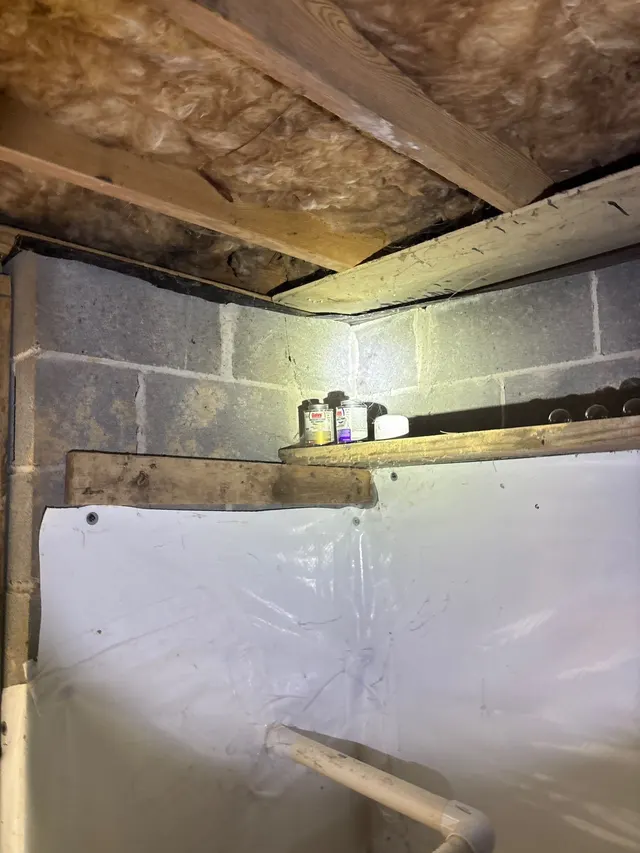
Concrete block (CMU) foundation walls are among the most common wall types in older Alabama homes. They crack in several distinct patterns: stair-step cracks through the mortar joints (differential settlement), horizontal cracks at mid-height (lateral soil pressure exceeding wall capacity, the most serious pattern), vertical cracks at corners (end-wall movement), and through-block cracks where the block itself has fractured.
Concrete block basements are extremely common in Birmingham-area homes built between 1945 and 1985. APS has repaired block foundations across Alabama since 1977. The combination of Alabama clay pressure and aging mortar makes block wall structural failure one of our most frequent serious repair categories.
What Causes Cracked Concrete Block Foundation Walls in Alabama Homes
Lateral Soil and Hydrostatic Pressure
Block walls are weaker in resisting horizontal forces than poured concrete walls. Alabama clay that is saturated with water exerts tremendous outward pressure. When this pressure exceeds the wall's capacity, the wall cracks horizontally at mid-height, its weakest point, and begins to bow inward.
Differential Settlement
Uneven soil compression beneath the footing causes one section of the block wall to drop relative to adjacent sections, creating stair-step cracking through mortar joints as the wall accommodates the movement.
Freeze-Thaw Cycles in North Alabama
Huntsville and north Alabama experience periodic freezing temperatures. Water trapped in block cores or mortar joints expands when it freezes, widening existing cracks and weakening mortar bond over successive winters.
Mortar Deterioration
In Alabama's heat and humidity, original mortar in block walls from the 1950s through 1970s is often well past its service life. Deteriorated mortar allows water into the wall system, accelerating both settlement cracking and lateral pressure damage.
Signs You Should Not Ignore
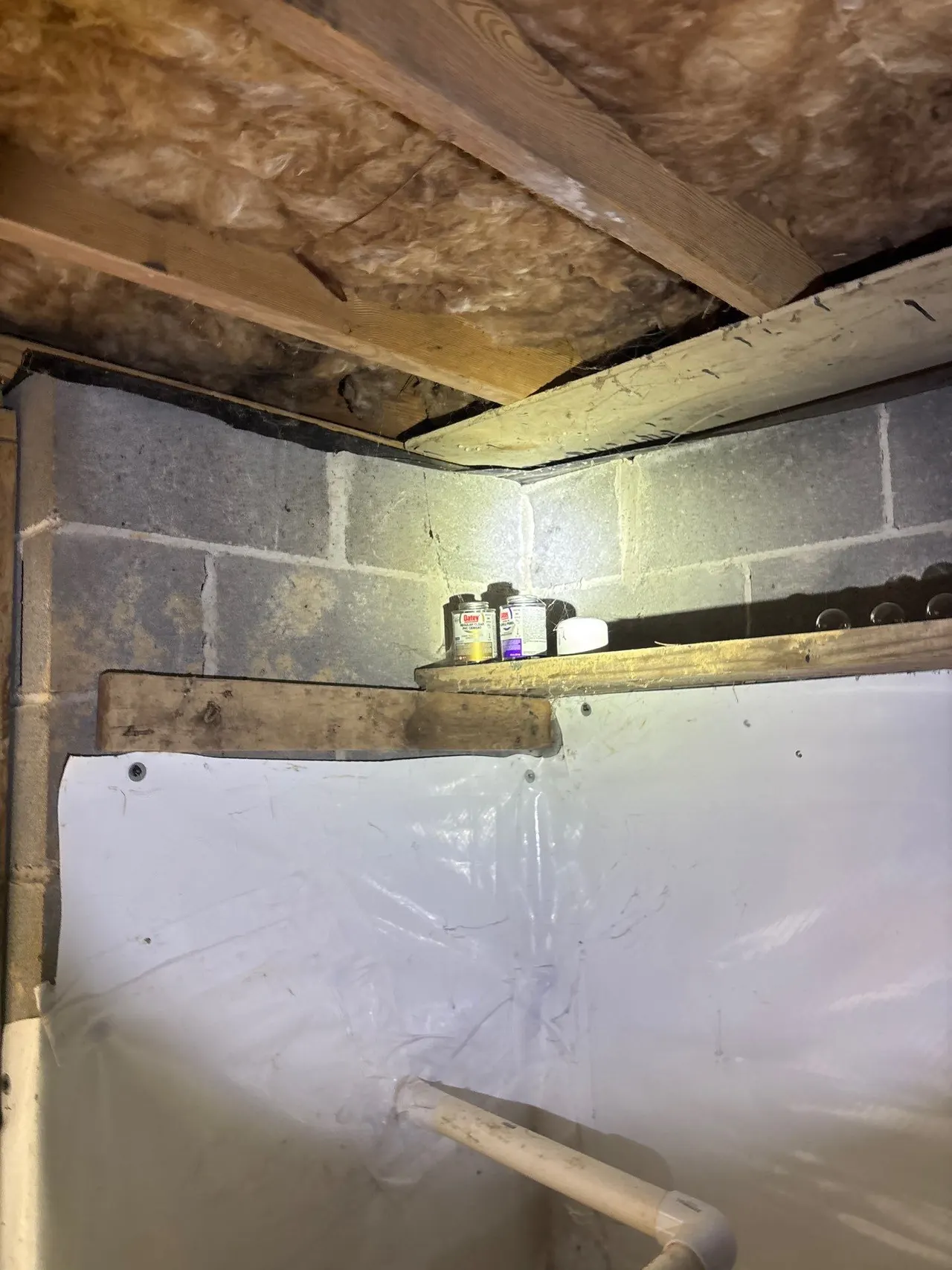
- Horizontal crack running the length of the wall at mid-height
- Wall visibly bowing or leaning inward
- Block units that have shifted out of alignment across the crack
- Stair-step cracks wider than 1/4 inch with displacement
- Through-block cracks where the block face has fractured
How We Diagnose and Repair the Problem
- 1
Free On-Site Assessment
An APS technician visits your property, documents the symptom and severity, and reviews all related indicators to build a complete picture.
- 2
Root Cause Diagnosis
Horizontal cracks with bowing are addressed with wall anchors driven into stable soil or carbon fiber straps; severely compromised sections may require tieback anchors or full wall replacement.
- 3
Written Estimate
You receive a clear written scope of work and cost estimate before any repair begins. No obligation.
- 4
Repair With Transferable Warranty
All APS foundation repairs carry a warranty that transfers to future owners. Serving Birmingham, Mobile, Huntsville, and Columbus, GA.
“A horizontal crack in a block wall is the one symptom that makes me want to get there the same day. That wall is telling you its limit has been reached.”
Frequently Asked Questions
Is a horizontal crack in my block wall really worse than a stair-step crack?
Yes, typically. A stair-step crack indicates differential settlement, serious, but often reparable with piers. A horizontal crack at mid-height indicates that lateral soil pressure has exceeded the wall's structural capacity. This is a sign the wall is in danger of catastrophic inward failure. Horizontal cracks in block walls should be evaluated immediately.
Can carbon fiber straps fix a cracked block wall?
Carbon fiber straps are highly effective for walls that are cracked but have deflected less than 2 inches. They bond to the wall face, engage the floor and footing, and prevent further inward movement. They do not straighten the wall but will stop it from moving further.
What happens if a bowing block wall is not repaired?
Bowing block walls do not self-arrest, the same soil conditions causing the bowing continue to act on the wall every wet season. Progressive failure leads to collapse of the wall section, which is both dangerous and extremely expensive to repair. Intervention is far less costly than replacement.
My basement has had water coming through the block wall for years. Is that making the cracking worse?
Yes. Water infiltrating through the block face indicates the mortar joints are compromised. Saturated soil behind the wall weighs more and exerts greater pressure than dry soil. Addressing drainage and waterproofing in conjunction with structural repair is the correct sequence.