

What Are Interior Drainage Systems?
An interior drainage system is a perimeter drain installed inside the basement at the base of the foundation wall, tied to a sump pump that discharges collected water away from the house. It is the most reliable answer to a basement that floods or seeps during Alabama's wet season, because instead of trying to hold back the water pressure in saturated clay, it gives the water that reaches the footing a controlled path out. APS installs interior drainage where hydrostatic pressure drives water through the cove joint, cracks, or porous block, and pairs it with exterior measures where surface water is part of the problem. The system runs below the finished floor line, so it protects the space without dominating it.
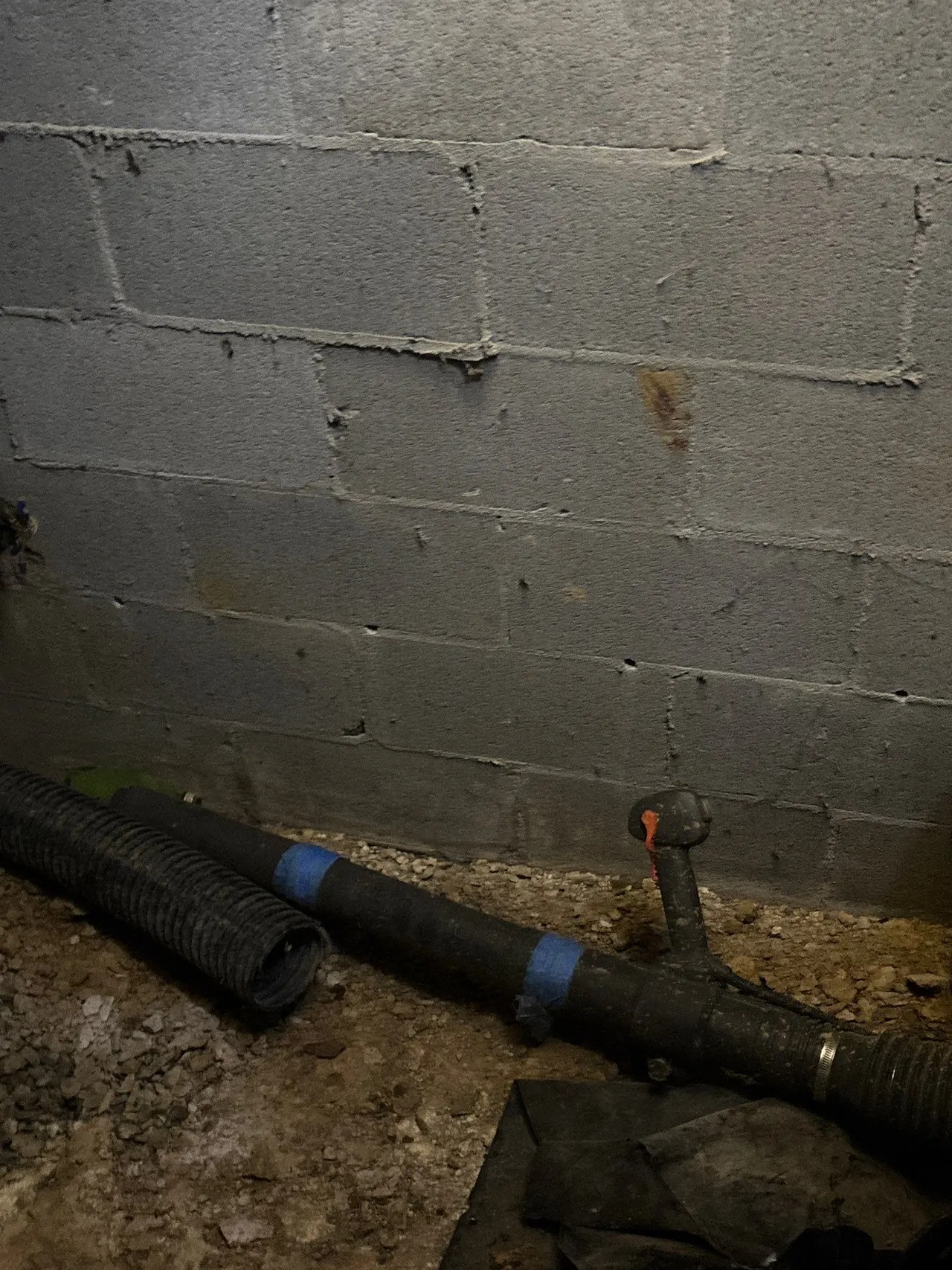
How Interior Drainage Systems Work
Water that reaches the foundation footing collects in a perforated drain channel set in the sub-slab gravel around the basement perimeter. The channel slopes to a sump basin at the low point. When water in the basin rises, the sump pump switches on and discharges it through a line that carries it well away from the foundation. Because the system relieves water at the footing rather than resisting pressure at the wall, it stops the flooding and seepage at the point of entry and keeps working every time it rains.
“You do not beat hydrostatic pressure by holding it back. You give the water a drain and a pump, and it stops being your problem.”
How APS Installs Interior Drainage Systems
- 1
Assessment and Water-Path Diagnosis
APS inspects to confirm where and why water enters, whether at the cove joint, through cracks, or through block, and whether exterior work is also needed.
- 2
Perimeter Channel Excavation
A channel is cut in the slab edge around the affected perimeter, exposing the footing so the drain sits at the correct depth to intercept water.
- 3
Drain and Gravel Bed Installation
A perforated drain pipe is bedded in clean gravel along the footing and sloped toward the sump location.
- 4
Sump Basin and Pump Installation
A sealed sump basin is set at the low point and fitted with a pump sized to the water volume, with a discharge line routed away from the foundation.
- 5
Restore and Test
The slab edge is restored, the system is tested, and APS confirms the pump cycles and discharges correctly.
What Interior Drainage Systems Cost and What Is Covered
Cost Range
Cost depends on the linear footage, access, and system specified. APS provides a free written estimate after the assessment.
Warranty
APS in-house workmanship warranty plus manufacturer warranties on system components, both fully transferable to future owners
Frequently Asked Questions
Why interior drainage instead of just sealing the walls?
Sealing tries to hold back water pressure that keeps building in saturated soil, and it usually fails at the next weak point. Interior drainage relieves the water at the footing and pumps it out, so it addresses the pressure rather than resisting it. That is why it holds up season after season.
Will an interior system handle a heavy Alabama downpour?
Yes, when sized correctly. APS matches the pump capacity and drain layout to the water volume the basement actually sees. For homes with frequent power loss during storms, a battery backup pump is available so the system keeps working when the grid does not.
Does the system take up basement space?
Very little. The drain runs below the floor at the perimeter and the sump basin sits flush in the slab. The usable space stays open, which is why interior drainage is common under finished and to-be-finished basements.
Is interior drainage enough on its own?
Often it is the core of the fix, but where surface water is loading the foundation, APS pairs it with exterior measures like grading and downspout extensions so less water reaches the footing in the first place. The assessment determines the right combination.