

What Uneven Concrete Slabs Tell You About Your Concrete Leveling
Walk the slab line and look at the joints. A healthy pour keeps its panels within a fingernail of each other. When one edge sits a half inch proud of the next, water or poor compaction has taken soil out from under the low side. In Alabama the usual driver is our wet season and drought cycle: clay swells through spring, shrinks hard in late summer, and granular fill under exterior slabs washes a little more with every storm. The gap you see at the joint is the void talking. Left alone, the low panel keeps settling, the joint opens wider, and water gets a bigger door with every rain. The fix is not new concrete. The slab is usually sound. It just needs the void beneath it filled and the panel lifted back to plane.
Alabama's clay soils and storm heavy climate make differential slab settlement common from Huntsville to Mobile. Panels over washout paths or loose fill drop while their neighbors hold, and the state's wet and dry cycle keeps the movement going until the void is filled.
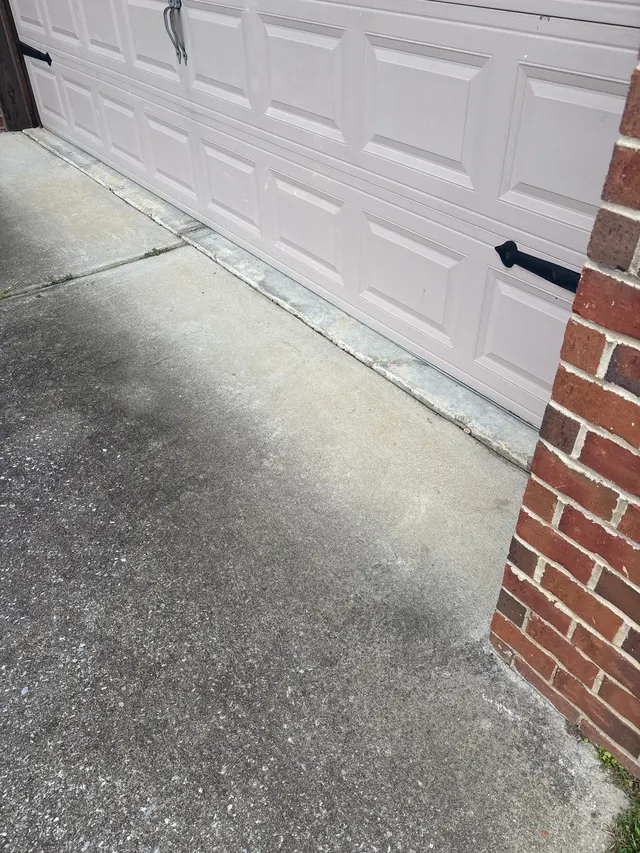
What Causes Uneven Concrete Slabs in Alabama Homes
Washout Under the Slab Edge
Roof water and surface runoff carry fine soil out from under slab edges a little at a time. After enough storms the edge loses bearing and the panel tips or drops. The March 2026 storm stretch alone moved measurable soil under slabs across central Alabama.
Poorly Compacted Fill
Slabs poured over loosely compacted fill settle as the fill consolidates. Garages, patios, and driveway additions on backfilled ground show it first, often within a few years of the pour.
Clay Shrink and Swell
Alabama red clay swells when saturated and shrinks in drought. Slabs riding that cycle move seasonally, and panels over the wettest or driest pockets move the most, which is why one panel drops while its neighbor holds.
Tree Roots and Root Decay
Roots lift panels as they grow and leave voids when they die and decay. Either way the slab ends up out of plane with its neighbors.
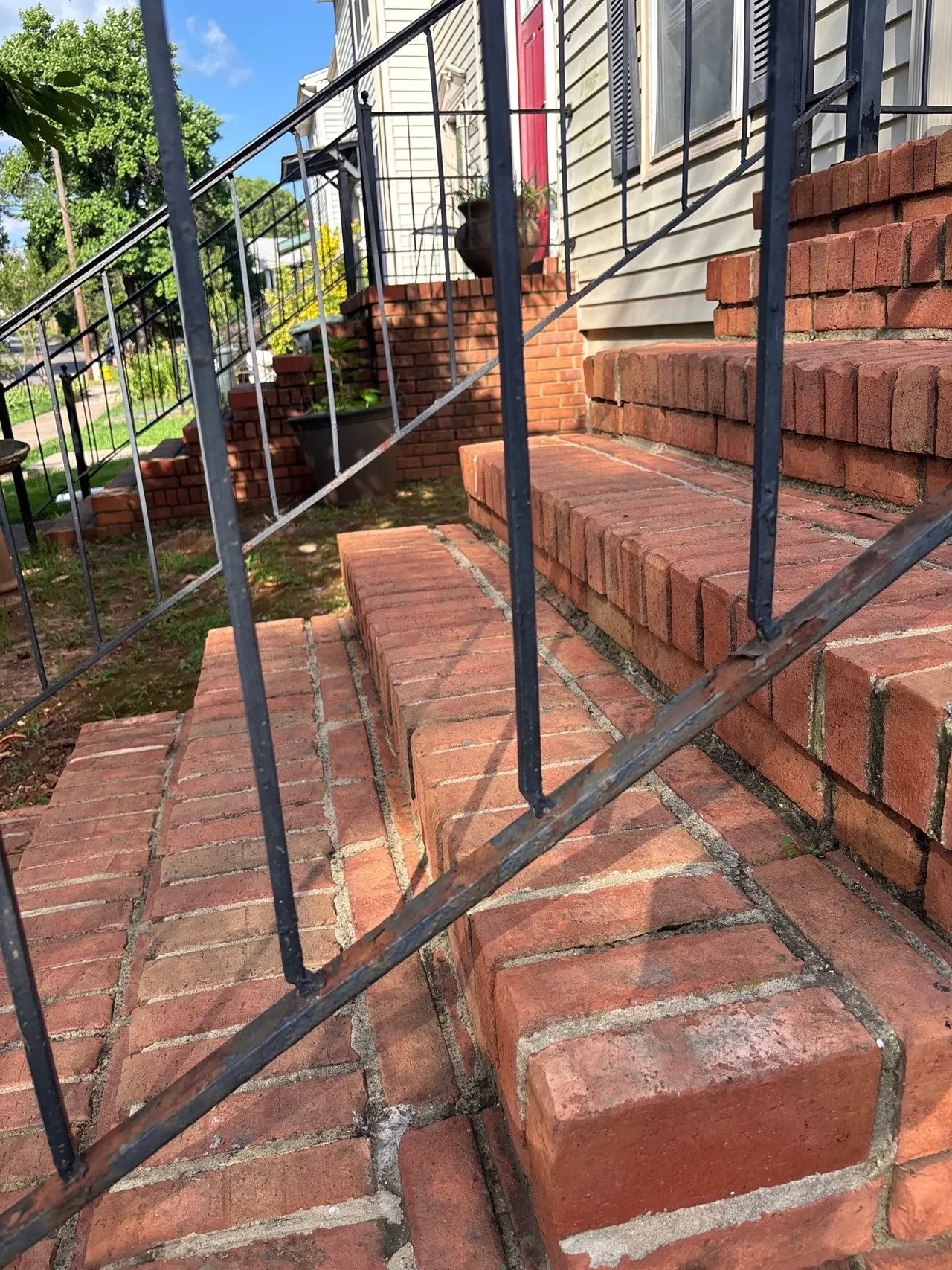
Signs You Should Not Ignore
- A step or lip where two panels meet that was not there before
- Joints opening wider on one side than the other
- Water ponding on the low panel after rain
- A hollow sound when you tap the low slab with a broom handle
- Caulk or joint filler stretched or torn at the panel line
- Doors or gates that scrape where a walkway panel has dropped
How We Diagnose and Repair the Problem
- 1
Free On-Site Assessment
An APS technician visits your property, documents the symptom and severity, and reviews all related indicators to build a complete picture.
- 2
Root Cause Diagnosis
APS drills dime sized ports in the low panel, injects structural polyurethane foam, and lifts the slab back to plane while filling the void that let it drop. The foam sets in minutes, is hydrophobic so the next storm cannot wash it away, and the slab is ready for traffic the same day. Where joints have opened, sealing them closes the water path that started the settlement.
- 3
Written Estimate
You receive a clear written scope of work and cost estimate before any repair begins. No obligation.
- 4
Repair With Transferable Warranty
All APS foundation repairs carry a warranty that transfers to future owners. Serving Birmingham, Mobile, Huntsville, and Columbus, GA.
“People assume sunken concrete means bad concrete. Nine times out of ten the panel is fine and the ground under it quit. Fill the void, lift the panel, close the water path. That is the whole job.”
Frequently Asked Questions
Can an uneven slab be fixed without replacing it?
Usually yes. If the concrete itself is sound, polyurethane foam injection lifts the sunken panel back to plane for a fraction of replacement cost and with no demolition. Replacement only makes sense when the slab is badly broken.
Why did only one panel sink?
Soil conditions change over short distances. A downspout, a tree, or a pocket of loose fill under one panel takes soil bearing away from that panel while its neighbors hold. The fix targets the void under the panel that moved.
Will the slab sink again after leveling?
The foam itself does not compress or wash out. If the water path that caused the washout is still open, soil around the repair can keep moving, so APS pairs lifting with joint sealing and drainage corrections where they are needed.
How much disruption does slab leveling involve?
A typical residential lift takes a few hours. The ports are the size of a dime, the equipment stays on the truck, and the slab carries traffic again the same day.