

What Is Grout Injection?
Grout injection is a specialized ground improvement technique in which cement-based grout is pumped under pressure into the soil or voids beneath a structure to fill cavities, densify loose material, and create a stable mass capable of supporting foundation loads. It is distinct from polyurethane foam injection, which is used for smaller-volume applications and concrete leveling: grout injection uses a cementitious mixture and is appropriate for larger void volumes, karst features, and applications requiring high-strength mass formation. In Huntsville and Madison County, Alabama, karst limestone geology creates conditions where solution voids can develop beneath foundations without warning. These voids may be triggered by heavy rainfall, changes in groundwater levels, or gradual dissolution of limestone over time. APS Foundation Repair and Waterproofing evaluates karst void risk as part of any foundation assessment in the Huntsville market and includes grout injection in our scope of available solutions. Grout injection is also used in other APS markets for loose fill stabilization, pier base grouting, and specialized underpinning applications.
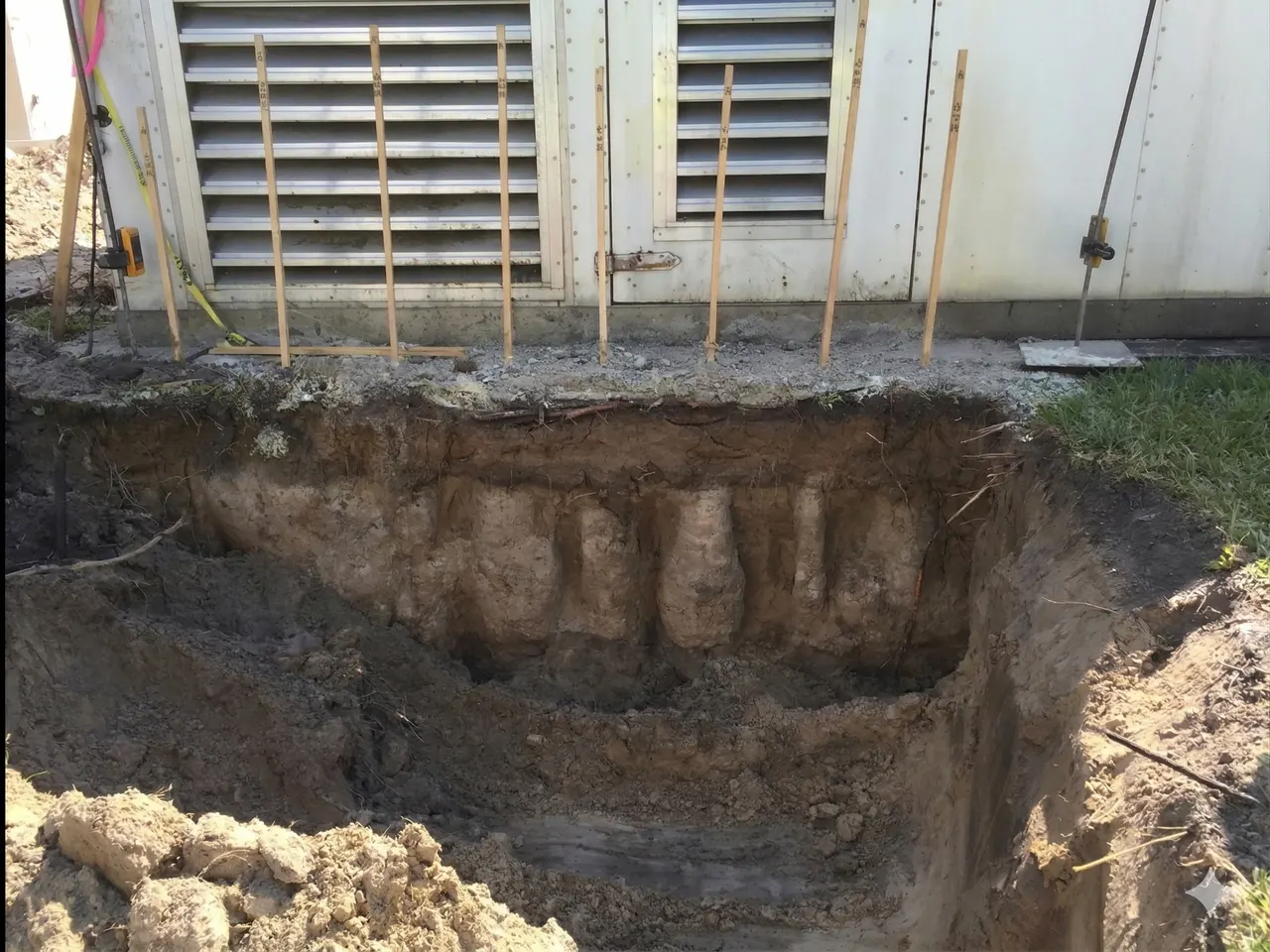
How Grout Injection Works
Grout injection begins with investigation to confirm void presence and approximate volume. Probing, ground-penetrating radar, or examination of settlement patterns helps APS determine injection point locations and spacing. Injection pipes are driven or drilled to the target depth and zone. Grout is then pumped under controlled pressure until the void is filled or the surrounding soil is sufficiently densified, monitored by volume injected and surface heave observation. Multiple injection points are used for larger void systems to ensure complete coverage. The cement grout sets to a solid mass that fills the void permanently and provides a firm bearing surface for the foundation above. Structural repair of the foundation itself, if needed, proceeds after ground stabilization is complete.
“In Huntsville, the karst question is always on our minds. Limestone voids do not always announce themselves before they cause problems, settlement can happen quickly when a void reaches a critical size. Grout injection is one of the few tools that addresses the void itself, not just the foundation sitting above it.”
How APS Installs Grout Injection
- 1
Void Investigation and Injection Plan
APS assesses settlement patterns, reviews site geology, and may use probing or available geophysical data to estimate void location and extent. Injection point locations and depths are specified in the treatment plan.
- 2
Injection Pipe Placement
Steel injection pipes are driven or drilled through surface material or through the foundation slab to the target void zone. Pipe diameter and type depend on depth and material to be penetrated.
- 3
Grout Mixing and Staging
Cement-based grout is mixed to the specified consistency for the application, flowable for void filling, stiffer for compaction grouting. A pump and mixing unit are staged at the surface.
- 4
Controlled Pressure Injection
Grout is pumped through each injection point at controlled pressure and volume. The crew monitors pressure readings and checks for surface movement to assess fill progress and prevent over-injection.
- 5
Sequential Point Treatment
Injection proceeds from point to point, allowing grout to travel laterally and fill connected void space. Points are re-treated if pressure indicates additional capacity.
- 6
Cure Period and Follow-Up Inspection
Injected grout is allowed to cure before surface or foundation repair work proceeds. A follow-up inspection confirms that settlement has stopped and that the treated zone is stable.
What Grout Injection Costs and What Is Covered
Cost Range
Project-specific; contact APS for assessment
Warranty
APS in-house warranty on installation workmanship; material warranty per grout manufacturer specifications
Frequently Asked Questions
How is grout injection different from polyurethane foam injection?
Grout injection uses a cement-based mixture and is suited for larger voids, karst features, and applications requiring high-strength permanent infill. Polyurethane foam injection uses an expanding two-part resin and is better suited for smaller-volume void filling under concrete flatwork and slab lifting. APS uses both methods and will recommend the appropriate one based on void size, depth, and application.
Is grout injection only relevant in Huntsville?
No, but karst void conditions are specifically a concern in Huntsville and Madison County due to the area's limestone bedrock geology. Grout injection is also used in other APS markets for loose fill densification, void filling beneath slabs, and base grouting in specialized underpinning applications.
How do you know if there is a void under my foundation?
Voids often reveal themselves through sudden or accelerating settlement, slab cracking with a characteristic circular or oval pattern, or soft spots in concrete floors. APS can assess settlement patterns and recommend investigation methods appropriate for your site conditions.
Will grout injection lift my foundation?
Compaction grouting can generate enough pressure to lift settled structures in some applications. However, grout injection is primarily a stabilization and void-filling technique. Structural lifting after stabilization is typically performed with pier systems. APS will design the repair sequence based on your specific conditions.
Is grout injection a permanent fix?
Yes, for the treated zone. Cement grout sets to a hard mass that does not degrade, compress, or wash away under normal conditions. In karst terrain, ongoing dissolution of limestone is a geological reality, so APS discusses long-term monitoring and the potential for future void development when recommending treatment in Huntsville-area projects.