
What Cracks in Foundation Walls Tell You About Your Foundation Repair
Cracks in a poured or block foundation wall are the wall reporting a force acting on it. Horizontal cracks near mid height, often with the wall bowing inward, point to lateral soil and water pressure. Stair step cracks through block mortar joints usually mean differential settlement, one part of the footing dropping away from another. Vertical cracks are frequently shrinkage from the original cure and are often benign, though a vertical crack that widens at one end is not. Width matters more than length: hairline cracks that stay put over months behave differently from a crack that has opened past a quarter inch or that you can track growing. APS assesses which mechanism is at work before recommending anything, because the repair for a wall under lateral pressure and the repair for a wall that has settled are not the same repair.
Alabama gives foundation walls three different problems depending on where the house sits. Birmingham and the Black Belt bring expansive clay that swells and shrinks seasonally, Mobile and the Gulf Coast bring a high water table and steady hydrostatic pressure, and Huntsville sits on karst limestone where voids can develop beneath footings and where the right repair is not assumed in advance.
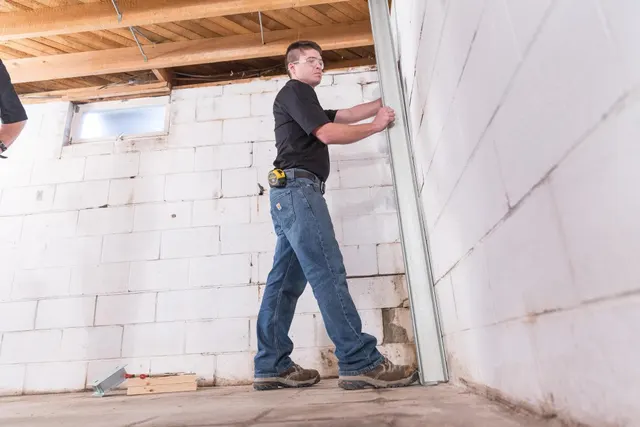
What Causes Cracks in Foundation Walls in Alabama Homes
Hydrostatic Pressure Against the Wall
Saturated soil holds water against the foundation and that water pushes. In Mobile and along the Gulf Coast a high water table keeps that pressure constant. The signature is a horizontal crack near the middle of the wall, sometimes with the wall bowing inward, and it is the pattern that warrants attention soonest.
Expansive Clay Movement
Birmingham and the Black Belt sit on smectite clay that swells hard when it takes on water and shrinks away in drought. That cycle loads and unloads the wall through the seasons, and the repeated movement opens cracks and works them wider year over year.
Differential Settlement
When one section of footing drops relative to another, the wall above has to span the difference and it cracks where it cannot. In block walls this shows as stair stepping through the mortar joints, usually running diagonally toward the corner that has dropped.
Original Construction and Curing
Thin sections, light reinforcement, poor consolidation during the pour, or backfill placed before the concrete gained strength all leave a wall more prone to cracking later. Narrow vertical shrinkage cracks from the initial cure are common and frequently stable, which is why width and movement over time matter more than presence alone.
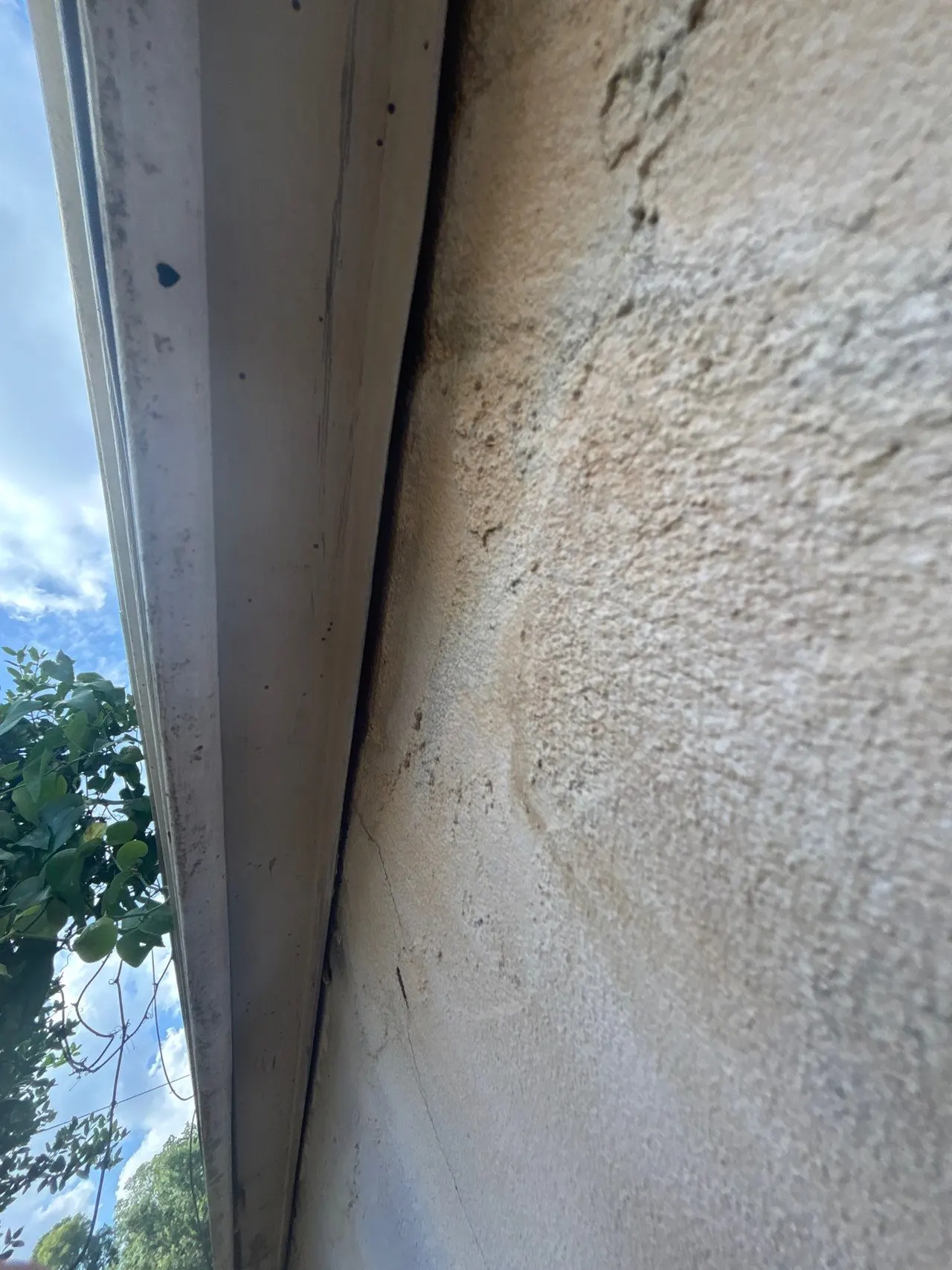
Signs You Should Not Ignore
- A horizontal crack across the wall, especially with any inward bowing
- Stair step cracking through the mortar joints of a block wall
- A crack wider than a quarter inch, or one that is visibly wider at one end
- A crack that has measurably opened over recent months
- Water, damp staining, or efflorescence tracking through the crack
- Doors or windows on the floor above beginning to stick or misalign
How We Diagnose and Repair the Problem
- 1
Free On-Site Assessment
An APS technician visits your property, documents the symptom and severity, and reviews all related indicators to build a complete picture.
- 2
Root Cause Diagnosis
The repair follows the mechanism. A wall under lateral pressure is reinforced and restrained, with carbon fiber straps or steel bracing, and the water pressure behind it is relieved through drainage. A wall that has cracked from settlement needs the footing supported before the crack is closed, otherwise the repair simply cracks again. Where the wall is sound and the crack is a water path rather than a structural failure, injection seals it. APS establishes which case applies first, then provides a free written estimate.
- 3
Written Estimate
You receive a clear written scope of work and cost estimate before any repair begins. No obligation.
- 4
Repair With Transferable Warranty
All APS foundation repairs carry a warranty that transfers to future owners. Serving Birmingham, Mobile, Huntsville, and Columbus, GA.
“The direction of the crack tells you most of the story. Horizontal means something is pushing on the wall. Stair stepping means something underneath it moved. We read that first, because the two problems have different repairs.”
Frequently Asked Questions
Is this the same as the drywall cracks upstairs?
No. Drywall cracks are an interior finish symptom, often the first visible hint that something is moving. A crack in the foundation wall is the structural member itself. They can share a cause, but they are assessed and repaired differently.
Which crack pattern should worry me most?
A horizontal crack, particularly with any inward bow to the wall, because that indicates lateral soil and water pressure the wall is struggling to resist. Stair step cracking indicates settlement and also warrants assessment. Narrow vertical shrinkage cracks are the most often benign, though they still deserve a look if they are widening.
Can I just fill the crack?
Filling addresses the opening, not the force that made it. If the wall is under pressure or the footing is still moving, a filled crack reopens or a new one appears nearby. Sealing is the right answer only once the mechanism has been identified and dealt with.
How do you tell if it is getting worse?
Width and change over time. APS records the crack width at specific points so it can be compared later, and looks for corroborating movement elsewhere, such as doors beginning to stick or floors going out of level.