
What Improper Drainage Around the Foundation Tells You About Your Foundation Repair
Improper drainage is not always a visible foundation crack or a bouncing floor, it is often the upstream condition that causes those symptoms to develop. When water from rainfall, roof runoff, or landscape irrigation cannot drain away from the foundation efficiently, it saturates the soil, increases hydrostatic pressure against foundation walls, raises moisture levels in crawl spaces, and drives the expand-shrink cycles of Alabama's expansive clay. In a state that receives 55 to 65 inches of rain annually, drainage management is not optional, it is the first line of defense for foundation longevity. Many foundation repairs that do not include drainage correction will fail to hold because the water problem that caused the damage is still present.
Alabama receives 55 to 65 inches of rainfall annually, compared to the national average of about 38 inches. The combination of high annual rainfall, periodic tropical storm events (especially in the Mobile area), and slow-draining clay soils means that drainage management is a critical issue for virtually every foundation in the state. Birmingham's hilly topography adds directional water flow to the challenge. Huntsville's karst geology means that some drainage appears to vanish into subsurface features, creating unpredictable soil moisture patterns that complicate foundation management.
What Causes Improper Drainage Around the Foundation in Alabama Homes
Negative Grade Toward the Foundation
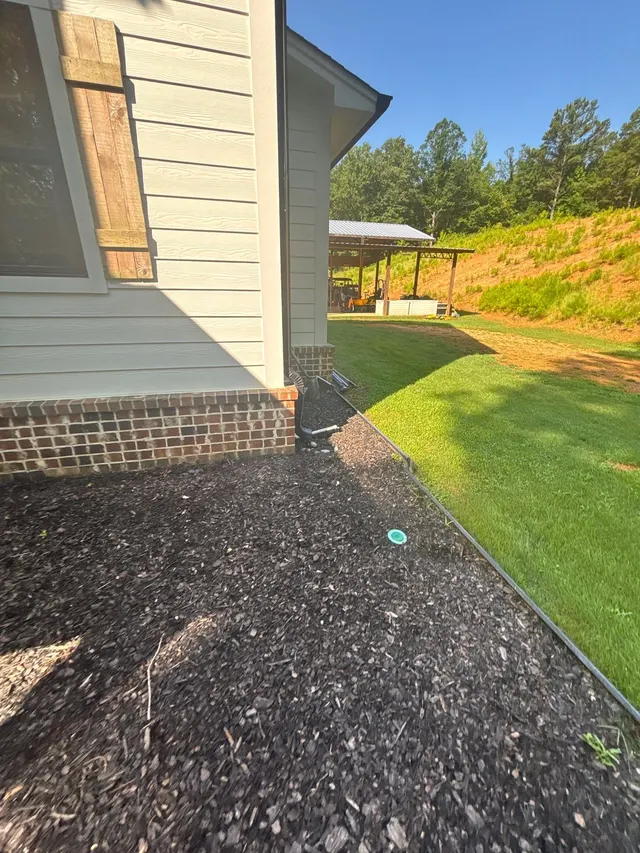
The ground around a home should slope away from the foundation at a rate of at least six inches per ten feet. When grade is flat, sloped toward the house, or has settled over time to create a bowl around the foundation, rainfall pools against the foundation wall or slab perimeter and slowly saturates the soil below.
Inadequate Gutters and Downspouts
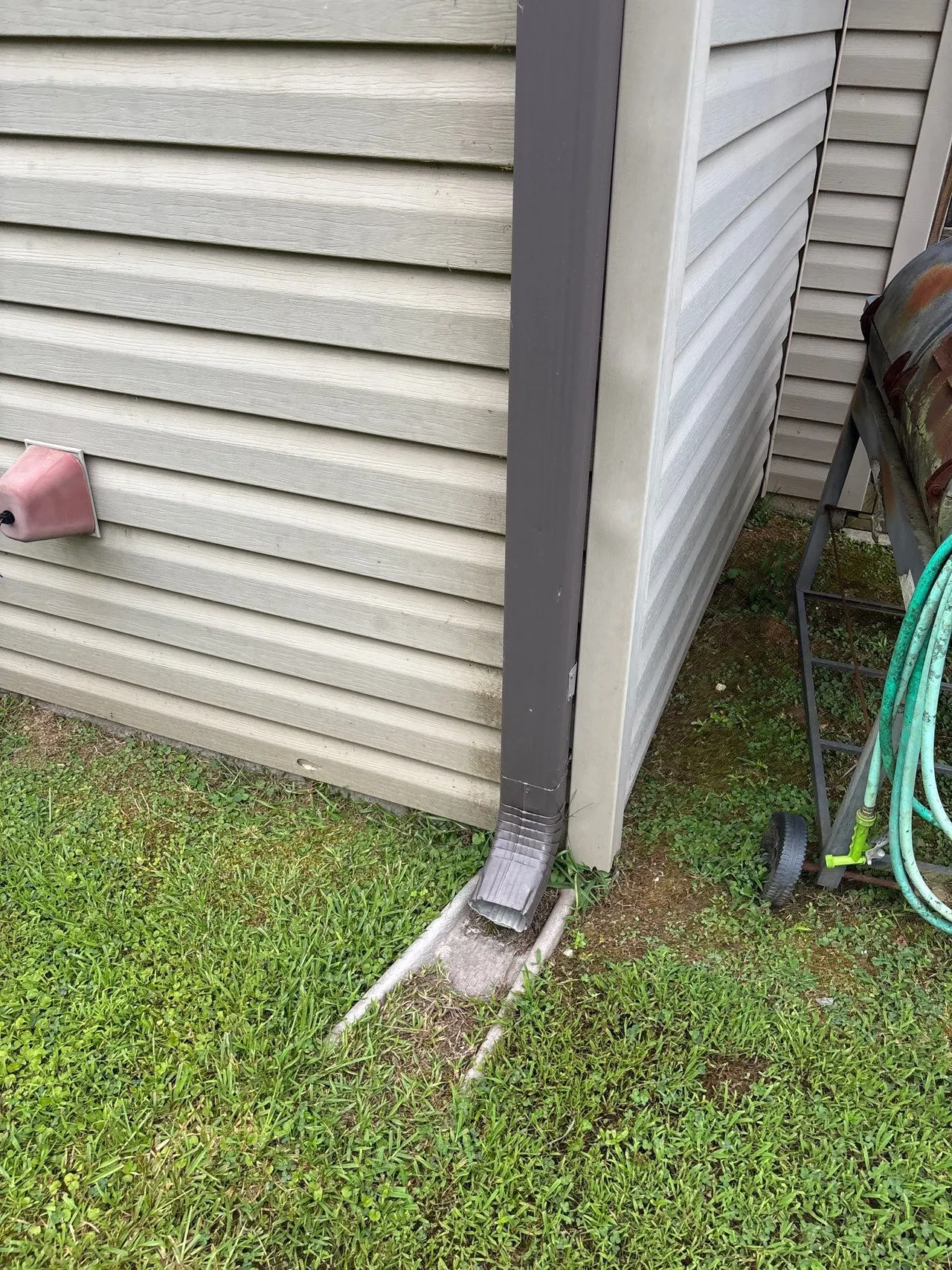
Undersized, clogged, or missing gutters allow roof runoff to cascade directly against the foundation perimeter during Alabama's heavy rainstorms. Downspouts that discharge at the foundation, rather than extending at least six feet away or connecting to an underground drain, concentrate large volumes of water exactly where they can do the most structural damage.
Failed or Absent French Drains
Many Alabama homes were built without perimeter drainage systems. Those that have them may find that the original French drains have silted up or collapsed over decades of use. Without functional perimeter drainage, all surface water that migrates toward the foundation must either evaporate, drain through the soil very slowly, or accumulate against the foundation wall.
Landscaping and Hardscaping That Directs Water Toward the House
Landscape beds with high mulch levels against the foundation, patio slabs that slope toward the house, and improperly installed retaining walls can all direct water toward the foundation rather than away from it. Irrigation systems that run too close to the foundation can saturate soil in ways that counteract any drainage improvements elsewhere.
Signs You Should Not Ignore
- Water pooling or standing against the foundation wall or slab perimeter after rain events
- Downspouts that discharge within three feet of the foundation
- Gutters that overflow during moderate rainfall, indicating they are undersized or clogged
- Soil that feels spongy or muddy near the foundation days after a rain event should have drained
- Water stains or efflorescence on the exterior foundation wall below grade level
- Basement or crawl space moisture or water intrusion correlated with rainfall events
- Foundation cracks or settlement that worsen in wet seasons and stabilize in dry ones
- Landscape mulch or soil level that is at or above the sill plate of the foundation
How We Diagnose and Repair the Problem
- 1
Free On-Site Assessment
An APS technician visits your property, documents the symptom and severity, and reviews all related indicators to build a complete picture.
- 2
Root Cause Diagnosis
A Huntsville homeowner was experiencing recurrent basement seepage despite two previous attempts at interior waterproofing. APS assessed the exterior grading and discovered the entire rear yard sloped toward the foundation, and both downspouts discharged within two feet of the basement wall. French drain installation and downspout extension corrected the drainage, and the basement stayed dry through the following two wet seasons without additional interior work.
- 3
Written Estimate
You receive a clear written scope of work and cost estimate before any repair begins. No obligation.
- 4
Repair With Transferable Warranty
All APS foundation repairs carry a warranty that transfers to future owners. Serving Birmingham, Mobile, Huntsville, and Columbus, GA.
“I always tell homeowners: before we talk about piers, let's talk about water. The best foundation repair in the world will struggle to hold if the drainage conditions that caused the problem are still in place.”
Frequently Asked Questions
Can fixing drainage alone solve a foundation problem?
If the structural damage has already occurred, settlement, cracking, or wall displacement, drainage correction alone will not undo it. But drainage correction is almost always a necessary part of a complete repair. Fixing the structure without fixing the water source that caused the damage leaves the repair vulnerable to the same forces that caused the original problem.
How do I know if my existing drainage is adequate?
Walk your property during or immediately after a heavy rain event. Look at where water moves, where it pools, where downspouts discharge, and where the soil appears saturated. If water is moving toward the foundation rather than away from it anywhere around the perimeter, that is inadequate drainage. An APS site assessment includes drainage evaluation as part of the foundation inspection.
Is drainage correction expensive?
It varies significantly by site. Grading correction and downspout extension are among the least expensive foundation-related improvements, often a few hundred dollars of materials and landscape work. French drain installation for a full perimeter can range from $2,000 to $8,000 depending on length and site conditions. These costs are modest compared to the foundation repairs that become necessary when drainage is ignored.
Does Alabama's heavy rainfall make drainage more important here than in other states?
Absolutely. Alabama's average annual rainfall of 55 to 65 inches is among the highest for any non-Pacific state. Combined with clay soils that drain slowly and retain water against foundations for extended periods, the drainage challenge in Alabama is significantly greater than in drier climates or those with sandy, free-draining soils. Drainage management deserves a higher priority here than almost anywhere else in the country.