

What Cracks at Door Frames, Ceilings, and Wall Corners Tell You About Your Foundation Repair
These cracks appear at the upper corners of door and window frames, along the line where walls meet the ceiling, and diagonally out of room corners. They often run at an angle rather than straight, and they tend to reopen after being patched. Because openings and corners concentrate structural stress, they are usually the first interior surfaces to crack when a foundation moves, well before you see anything on the exterior.
Because so many Alabama and west Georgia homes sit on expansive clay that flexes each wet season, interior cracks at corners, ceilings, and door frames are among the most frequent early signs APS is called to evaluate.
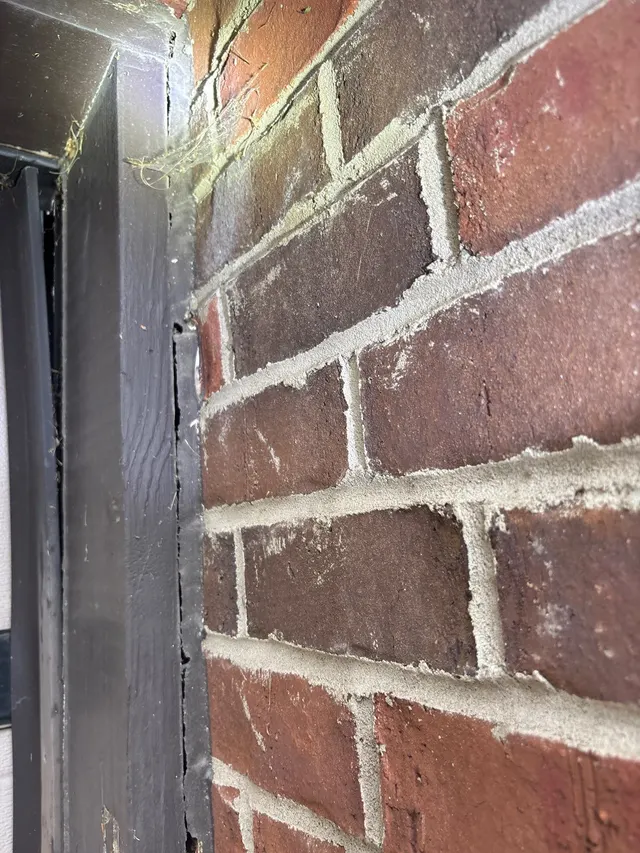
What Causes Cracks at Door Frames, Ceilings, and Wall Corners in Alabama Homes
Differential Settlement
When one part of the foundation drops relative to another, the framing above distorts and the rigid drywall cannot follow the movement. It tears at its weakest points, the corners of openings, producing the diagonal cracks that radiate from door and window frames.
Expansive Soil Movement
Clay-rich Alabama soils swell when wet and shrink when dry, flexing the foundation and the walls it carries. That repeated flexing opens cracks at ceiling lines and corners, and reopens them each season if the underlying movement is not stopped.
Framing Racking at Openings
Door and window openings are framed with headers and jacks that carry load around the gap. As the structure shifts, these framing members rotate slightly, and the crack telegraphs through the drywall at the corner of the opening.
Ceiling and Wall Separation
A gap opening where the wall meets the ceiling often means the wall and the framing above are no longer moving together, which points to movement in the floor or foundation system below rather than a simple drywall defect.
Signs You Should Not Ignore
- Cracks run diagonally from the corners of doors or windows
- A gap is opening along the wall-to-ceiling line
- Cracks reopen within months of being patched and painted
- The cracks appear alongside sticking doors or sloping floors
- Crack width exceeds about 1/8 inch or is visibly widening
How We Diagnose and Repair the Problem
- 1
Free On-Site Assessment
An APS technician visits your property, documents the symptom and severity, and reviews all related indicators to build a complete picture.
- 2
Root Cause Diagnosis
Where the cracks trace active foundation settlement, stabilizing the structure with push piers or helical piers stops the movement; carbon fiber reinforcement or crack repair then addresses the walls once the cause is controlled.
- 3
Written Estimate
You receive a clear written scope of work and cost estimate before any repair begins. No obligation.
- 4
Repair With Transferable Warranty
All APS foundation repairs carry a warranty that transfers to future owners. Serving Birmingham, Mobile, Huntsville, and Columbus, GA.
“Interior corner and door-frame cracks are usually the first thing a foundation shows us. They tell us where the building is working hardest to hold itself together.”
Frequently Asked Questions
Are corner cracks always serious?
Not always. Fine, stable hairline cracks at openings can result from normal drying and minor settling in the first year of a home. The concern is cracks that are diagonal, widening, reopening after repair, or appearing with other signs like sticking doors and sloping floors.
Why do the same cracks come back after I patch them?
Patching restores the surface but does nothing about the movement underneath. If the foundation is still shifting, the wall keeps flexing and the crack returns at the same weak point. Stopping the movement is what makes a repair last.
Why do cracks start at doors and corners?
Openings and corners interrupt the continuous strength of a wall, so they carry concentrated stress. When the structure is strained, those points fail first, which is why a door corner crack is often the earliest visible warning.
How does APS decide if it is structural?
We look at crack direction and width, measure floor elevations, inspect the foundation, and check for companion signs. A consistent pattern across the home points to the foundation, and we explain what we found before proposing any work.