

What Gaps Between Walls and Ceiling Tells You About Your Foundation Repair
A gap forming between a wall and the ceiling, or between crown molding and the ceiling, looks like a minor cosmetic issue but is often a reliable early indicator of differential foundation settlement. As one part of the foundation sinks relative to another, the structural connections between walls and the ceiling assembly are placed under tension. The wall literally pulls away from the ceiling plane as the foundation drops beneath it. In Alabama homes, this is most commonly seen on exterior walls, particularly on the side of the house facing the most sun exposure (which dries soil unevenly) or where drainage concentrates water near the foundation.
In Alabama, the combination of wet winters, dry summers, and highly expansive clay soil creates ideal conditions for cyclic differential settlement. Birmingham-area homes built on red clay hillsides are particularly susceptible. In Huntsville, the presence of karst geology beneath clay overburden means that settlement causes can be more complex, a thorough site assessment is especially important before any repair plan is finalized.
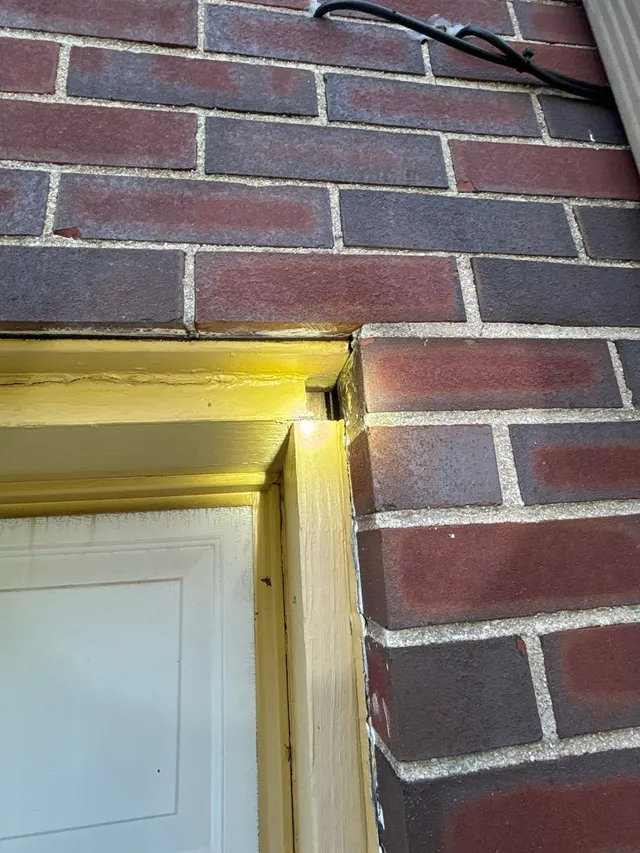
What Causes Gaps Between Walls and Ceiling in Alabama Homes
Differential Foundation Settlement
When one side or corner of a foundation settles more than the rest, the wall above it drops while the ceiling remains supported by interior structure or the opposite wall. This creates tension at the wall-ceiling joint, eventually opening a visible gap. Alabama's highly variable clay soils make differential settlement extremely common.
Seasonal Soil Shrinkage
During Alabama's dry summer months, clay soil beneath one side of a foundation can shrink and pull away, allowing the foundation to drop slightly. The resulting movement is often gradual enough to go unnoticed until a gap forms at the ceiling. The gap may partially close in wet seasons, leading homeowners to dismiss it, but the cycle is progressive over time.
Foundation Rotation or Tilting
A foundation that tilts rather than sinking straight down will cause the wall on the settling side to rotate outward slightly at the top, pulling the wall-ceiling connection apart. This is common when saturated soil conditions exist on one side of a structure but not the other.
Roof or Framing Load Redistribution
As foundation settlement progresses, roof and floor loads shift and redistribute through the framing. This can cause the framing above to deflect, opening gaps at wall-ceiling intersections even in rooms not directly over the settled area.
Signs You Should Not Ignore
- A visible gap, even a thin line, running along the top of a wall where it meets the ceiling
- Crown molding that has separated from the ceiling surface along its top edge
- Crown molding or cove molding that has separated from the wall along its bottom edge
- Drywall tape lifting or bubbling at wall-ceiling joints
- Gaps that run horizontally for several feet rather than appearing as isolated small spots
- Multiple gaps on the same wall or on walls that share a foundation corner
- Gaps that reappear after being caulked or patched, indicating ongoing movement
- Accompanying symptoms such as sticking doors, diagonal drywall cracks, or sloping floors
How We Diagnose and Repair the Problem
- 1
Free On-Site Assessment
An APS technician visits your property, documents the symptom and severity, and reviews all related indicators to build a complete picture.
- 2
Root Cause Diagnosis
A Huntsville homeowner noticed a quarter-inch gap had opened along the entire length of a bedroom's exterior wall where it met the ceiling. After an APS assessment confirmed two inches of differential settlement in the rear foundation, helical piers were installed to stabilize the settled section and provide partial lift. The gap closed significantly, and the homeowner re-caulked the remaining hairline separation as a final cosmetic step.
- 3
Written Estimate
You receive a clear written scope of work and cost estimate before any repair begins. No obligation.
- 4
Repair With Transferable Warranty
All APS foundation repairs carry a warranty that transfers to future owners. Serving Birmingham, Mobile, Huntsville, and Columbus, GA.
“A gap at the top of a wall is the structure telling you it has been pulled apart. That kind of tension does not come from paint aging or wood movement, it comes from the foundation moving downward and taking the wall with it.”
Frequently Asked Questions
Can normal house settling cause ceiling gaps?
New construction does experience a settling-in period where minor shrinkage cracks and small separations can appear. However, these stabilize within the first few years. Gaps that appear in an established home, that are growing, or that are accompanied by other symptoms like sticking doors and sloping floors are not normal settling, they are signs of active foundation movement that should be evaluated.
My contractor said it is just the house breathing. Should I be concerned?
Small hairline separations at molding in a home's first year or two can be normal wood movement. But if your home is more than a few years old, the gap is growing, or you have other symptoms, the explanation of 'house breathing' is worth a second opinion. A free foundation assessment from APS takes the guesswork out of it.
Can I just caulk the gap and be done with it?
You can caulk it as a temporary cosmetic measure, but if the foundation is still moving, the caulk will crack open again, often within one seasonal cycle. Caulking a gap caused by foundation settlement is like putting a bandage over a broken bone. The underlying issue needs to be addressed.
How serious are ceiling gaps compared to wall cracks?
Ceiling gaps and wall cracks are both expressions of the same underlying issue, foundation movement. Neither is more 'serious' than the other by default; severity depends on how much total movement has occurred, how fast it is progressing, and what structural elements are affected. An on-site assessment is the only way to determine severity accurately.