

What Are Basement Dehumidifiers?
Dehumidification handles the part of a basement moisture problem that drainage cannot reach. Even with drainage and a pump working properly, concrete walls and floors continuously absorb moisture from the surrounding soil and release it into the air as vapour. In an Alabama summer that vapour meets cooler basement surfaces and condenses, which is what produces the musty smell, the damp feel, condensation on ductwork and windows, and the conditions mould needs. A dehumidifier sized to the space and drained to the sump or an existing line runs continuously in the background and holds relative humidity at a level where those problems do not start.
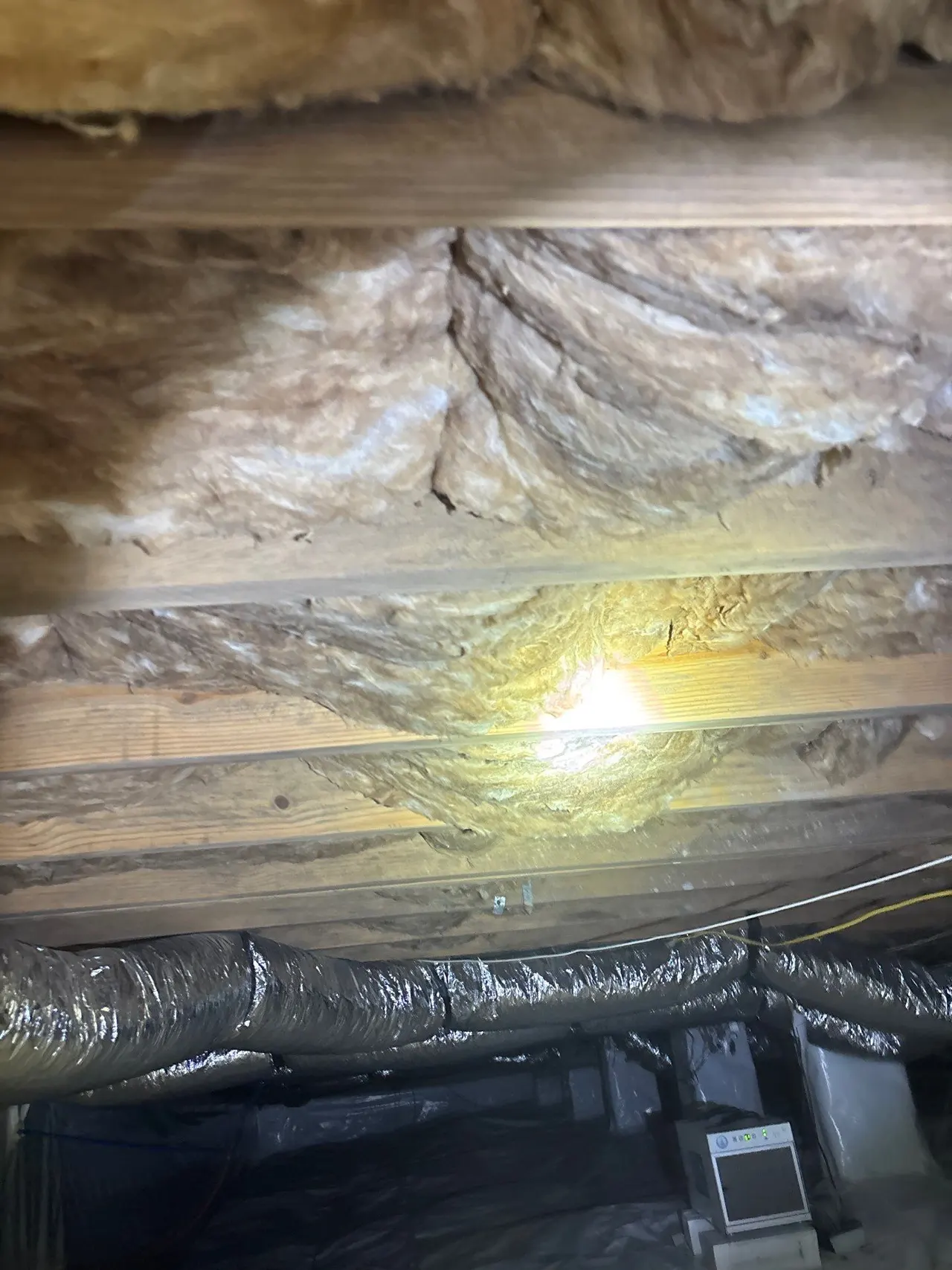
How Basement Dehumidifiers Work
The unit draws basement air across a cold coil, condensing the moisture out of it, then reheats and returns the drier air to the room. The collected water drains away, typically to the sump basin or an existing drain line, so there is no reservoir to empty. Control is by humidity rather than temperature, so the unit runs when the air needs drying rather than on a schedule. Sizing matters: a unit too small for the floor area never reaches its setpoint and runs constantly, while correct sizing holds humidity steadily and costs less to operate. Where the basement is finished, the unit can be ducted so drier air reaches the rooms that need it.
“People assume damp means a leak. Often there is no leak at all, just concrete breathing moisture out of the soil all summer. That is a humidity problem, and you solve it with air, not drainage.”
How APS Installs Basement Dehumidifiers
- 1
Measure the actual conditions
We record relative humidity and look at where condensation is forming, because the pattern shows whether the issue is vapour from the slab and walls, an air leak, or unresolved liquid water that drainage should be handling.
- 2
Deal with liquid water first
If water is still entering, dehumidification is treating a symptom. Drainage and pump work come first, then the unit handles the vapour that remains.
- 3
Size to the space
The unit is selected for the floor area and ceiling height it actually has to serve, so it reaches setpoint and cycles rather than running flat out.
- 4
Install and drain
The unit is placed for good air movement and plumbed to a continuous drain, normally the sump basin or an existing line, so it needs no emptying. Ducting is added where finished space has to be served.
- 5
Set humidity and verify
The target humidity is set, the unit is confirmed to reach and hold it, and we explain filter servicing and what readings to expect through the seasons.
What Basement Dehumidifiers Cost and What Is Covered
Cost Range
Cost depends on the size of the space, the unit specified, and whether ducting and drainage work are required. APS provides a free written estimate after assessing the basement.
Warranty
APS provides an in house workmanship warranty on the installation, alongside the manufacturer warranty on the unit itself. Both are set out in writing before work is scheduled.
Frequently Asked Questions
I already have waterproofing. Why is it still damp?
Drainage removes liquid water. It does nothing about vapour, and concrete absorbs moisture from the soil and releases it into the air continuously. That vapour is what makes a dry basement still feel damp and smell musty.
Will a hardware store unit do the same job?
A portable unit is generally sized for a room rather than a basement, and it collects into a reservoir somebody has to empty. An installed unit is sized to the space and drains continuously, which is what lets it hold humidity steadily instead of falling behind in summer.
Does this help with mould?
Mould needs moisture. Holding relative humidity down removes the condition it depends on, which is why dehumidification is part of the answer. APS is a foundation and waterproofing company and does not perform mould remediation itself.
How much does it cost to run?
A correctly sized unit reaches its setpoint and cycles rather than running continuously, which is the main driver of running cost. An undersized unit never catches up and runs constantly, which is why sizing is done against the actual floor area.